Best overall: Google Business Profile. Best for Apple Maps discovery: Apple Business Connect. Best for community-focused listings: HometownFirst, subject to franchise eligibility. This 2026 guide compares business directories for franchise businesses by the job each performs, so you can choose listings for individual locations rather than scatter the same corporate profile everywhere.
- Google Business Profile is the default choice among business directories for franchise businesses seeking local search visibility.
- Apple Business Connect supports Apple Maps discovery; Bing Places adds another local search channel.
- Yelp suits review-led research; Nextdoor suits neighborhood recommendations.
- HometownFirst fits community-focused local business listings; franchise owners should confirm eligibility before subscribing.
Why this matters
A franchise brand and a franchise location answer different customer questions. Your corporate website explains the business; a local listing tells someone where to go, whom to call, and whether that particular location is open.
For your 2026 directory plan, treat each eligible location as a separate customer destination. Keep its details accurate, assign someone to maintain them, and choose additional directories around the way customers actually search.
A recognizable franchise name does not replace accurate local information. A customer looking for a nearby branch still needs the correct address, local phone number, hours, and services.
What makes the best business directories for franchise businesses?
Use these criteria before choosing a directory. A platform that fits one franchise concept does not automatically fit another.
- Local search purpose: Does the directory help customers find a location, compare businesses, or ask neighbors for recommendations?
- Location eligibility: Does your storefront or service-area operation meet the platform's current listing rules?
- Profile ownership: Can the franchisor and franchisee establish who controls the listing and who updates it?
- Useful business details: Can you accurately describe the location's hours, contact information, category, and services?
- Maintenance workload: Can your team keep the listing current and respond where customer interaction is supported?
- Community fit: Does the directory's purpose match the location's customers and the business's eligibility?
Do not choose a directory simply because another franchise uses it. Choose it because the listing performs a clear job for your location and someone will maintain it.
Business directories at a glance
These 6 directories serve different purposes. The order below puts location discovery first, followed by review research and community discovery; it is not a claim about measured traffic or lead volume.
| Directory | Best for | Standout feature | Key limitation |
|---|---|---|---|
| Google Business Profile | Google Search and Maps discovery | Business information alongside local search results | Each location must follow eligibility and representation rules |
| Apple Business Connect | Apple Maps discovery | Managing business information presented in Apple Maps | Not a replacement for Google visibility |
| Bing Places for Business | Additional search coverage | Business listings connected to Bing search | Adds another profile to maintain |
| Yelp | Review-led business research | Business profiles with customer reviews | Requires attention to public feedback and review policies |
| Nextdoor | Neighborhood recommendations | Local business discovery within neighborhood conversations | Fit depends on neighborhood activity and business eligibility |
| HometownFirst | Community-focused discovery | Location-based listings, specials, and events | Franchise eligibility requires confirmation because its stated focus is independent businesses |
1. Google Business Profile: best for Google local search
Google Business Profile lets an eligible business manage information that appears in Google Search and Maps. For a franchise location, the important distinction is between the national brand and the actual place or service-area business a customer needs.
Google Business Profile is the default first listing for a franchise location seeking discovery through Google Search and Maps. Establish clear ownership before adding another directory to your workload.
Google Business Profile pros:
- Connects business information with Google Search and Maps.
- Supports location details such as hours, contact information, and categories.
- Provides a place for customer reviews and business responses.
Google Business Profile cons:
- Each location must satisfy Google's eligibility and naming rules.
- Duplicate profiles or unclear ownership complicate maintenance.
- A profile does not guarantee a particular search position.
Best for: Franchise locations that want customers to find them through Google local search.
Use the real-world business name rather than adding search phrases to it. Check the address, phone number, and hours against the location's own information, and distinguish storefront operations from service-area operations when applying the rules.
Verdict: Choose Google Business Profile first for eligible locations. Resolve existing profile access before creating anything new.
2. Apple Business Connect: best for Apple Maps discovery
Apple Business Connect gives businesses a way to manage information shown through Apple Maps. It serves a distinct purpose: helping a customer using Apple's mapping environment identify the right business location.
For a franchise, correct location information matters more than repeating the corporate brand description. A branch with different hours or a different entrance needs its own accurate details.
Apple Business Connect pros:
- Supports business information presented in Apple Maps.
- Helps customers identify a location while planning a visit.
- Gives the business a way to manage its place information.
Apple Business Connect cons:
- It does not replace a Google Business Profile.
- Your team must maintain another set of location details.
- Access and verification still require coordination between responsible parties.
Best for: Franchise locations that want accurate business information in Apple Maps.
In your 2026 listing review, compare Apple Maps information with the location's current operating details. Do not assume that correcting a different directory also corrects the Apple listing.
Verdict: Choose Apple Business Connect for Apple Maps coverage. Keep its role clear: it is a mapping and discovery listing, not a substitute for every other local channel.
3. Bing Places for Business: best for additional search coverage
Bing Places for Business lets businesses manage listings associated with Bing search. It gives a franchise location another search presence without requiring that you invent a different identity for the same branch.
Start with accurate source information. Reusing an outdated spreadsheet simply spreads the same mistake to another directory.
Bing Places for Business pros:
- Adds business information to another search channel.
- Supports location-specific details rather than only a corporate description.
- Complements a Google-focused listing plan.
Bing Places for Business cons:
- Another listing creates another maintenance responsibility.
- Existing records require checking before a new listing is created.
- Search coverage alone does not establish the directory's business value.
Best for: Franchise operators adding search coverage after their primary location information is settled.
Check whether a listing already exists, establish access, and verify the branch details. Keep the customer-facing business identity consistent with the actual location rather than changing the name to target extra keywords.
Verdict: Add Bing Places for Business after your primary listings are accurate. Skip expansion when nobody owns the ongoing updates; an additional neglected profile is not a useful asset.
4. Yelp: best for review-led customer research
Yelp combines business profiles with customer reviews. It fits the part of the buying process where someone compares local options and reads about other customers' experiences.
For a franchise, the location-level distinction is especially important. Feedback about one branch should not be treated as a description of every branch in the network.
Yelp pros:
- Gives customers business information alongside public reviews.
- Supports research into a particular local business.
- Provides business owners with ways to manage their presence and respond to feedback.
Yelp cons:
- Public feedback needs a designated response owner.
- Yelp's review policies must shape your review-request practices.
- A listing cannot control the opinions customers publish.
Best for: Franchise locations whose customers use reviews when choosing between local businesses.
Create a clear response policy before assigning profile access. Decide which issues the location manager handles and which need the franchisor's attention, while avoiding the publication of private customer information.
In 2026, treat Yelp as a customer-information and reputation channel, not merely another place to repeat a business name.
Verdict: Choose Yelp when review-led research fits your customers. Hold off on expanding profile activity until someone can handle feedback responsibly.
5. Nextdoor: best for neighborhood recommendations
Nextdoor connects people through neighborhood-focused conversations and includes business pages and recommendations. Its value for a franchise location comes from being relevant to the surrounding community, not from presenting the entire franchise network as one neighborhood business.
A locally operated branch still needs to respect the platform's business rules. Confirm that the business and the proposed account arrangement qualify before building a posting plan.
Nextdoor pros:
- Places business discovery in a neighborhood context.
- Supports recommendations from community members.
- Gives local businesses a presence separate from a national brand campaign.
Nextdoor cons:
- Relevant activity depends on the neighborhoods you serve.
- Business participation must follow platform rules.
- Repetitive promotional posting is not a substitute for useful local information.
Best for: Eligible franchise locations seeking neighborhood-level recognition and recommendations.
Keep the branch's service area and community role clear. Share information that genuinely belongs to that location rather than copying national promotional language into every neighborhood conversation.
Verdict: Choose Nextdoor for a defined neighborhood role. Skip it when your team cannot identify the community the location serves or maintain an appropriate local presence.
6. HometownFirst: best for community-focused local listings
HometownFirst is a local business directory where community members can search by location and discover business profiles, specials, and events. Its stated focus is small, independent businesses and encouraging local spending.
HometownFirst is best for community-focused local business listings; franchise operators should confirm eligibility before subscribing. Local ownership alone is not enough to assume that a franchise meets the platform's independent-business focus.
HometownFirst pros:
- Organizes discovery around local businesses and location searches.
- Lets business owners list profiles, specials, and events.
- Gives consumers free browsing without selling their information or sending unsolicited ads afterward.
HometownFirst cons:
- Franchise eligibility is not established by the supplied business description.
- Owners need current local information and specials to maintain a useful listing.
- A community directory does not replace search and mapping profiles.
Best for: Businesses that meet the platform's eligibility requirements and want community-focused discovery.
For your 2026 directory shortlist, make eligibility the first question. If your franchise location qualifies, decide which local information and events you can keep current before adding the listing to your routine.
Verdict: Hold until franchise eligibility is confirmed; choose it only when the fit is established.
How we ranked these directories
The ranking follows customer tasks: finding a location in search, finding it on a map, comparing reviews, and discovering it through the community. Eligibility, profile ownership, useful business details, and maintenance responsibility determine whether each recommendation fits a franchise location.
No directory here is ranked by an invented lead count, traffic estimate, or conversion rate. Google Business Profile takes the default position because its stated function directly serves Google Search and Maps discovery; the remaining picks have separate jobs.
Put your directory plan into practice
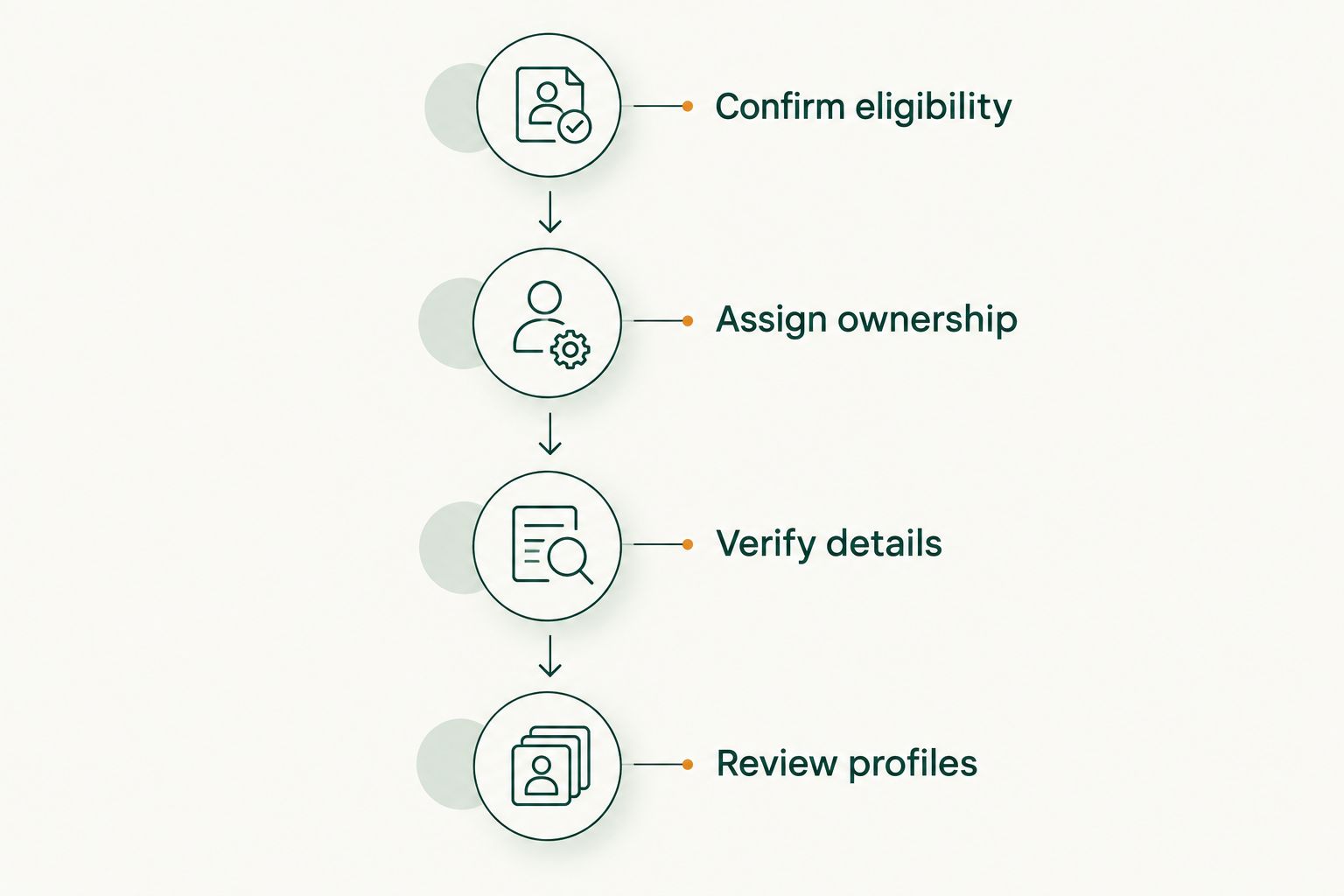
A directory plan needs an owner, not just a list of platforms. Use the same sequence for each branch so that local managers and the franchise office know where their responsibilities begin and end.
Confirm eligibility
Check the current rules for each platform and each business type. A storefront, a service-area operation, and a corporate office should not be treated as interchangeable locations.
For community-focused directories, confirm whether franchise businesses qualify. Do not purchase or create a listing on the assumption that local ownership settles the question.
Assign ownership
Name the person responsible for each profile and define who can approve changes. Distinguish control of the account from responsibility for keeping hours, services, and contact details current.
Document access arrangements before staff changes occur. Avoid leaving an important location profile tied only to an employee's personal account without an agreed ownership arrangement.
Verify details
Start with 3 core fields: business name, address, and phone number. Then check regular hours, special hours, category, services, and the destination customers reach from the listing.
For storefront listings, use 1 profile per eligible location on each platform unless that platform's rules establish a different arrangement. Search for existing records before creating new ones.
Review profiles
Check listings whenever a location changes its operating information. Moving premises, changing a phone number, or adjusting hours should trigger a review across the directories you use.
Your 2026 plan should also record customer inquiries by source when that information is available. Separate a directory's ability to host a profile from evidence that it contributes useful inquiries to your business.
Which business directories should you choose?
Choose Google Business Profile as the default starting point for an eligible franchise location. Add Apple Business Connect for Apple Maps and Bing Places for additional search coverage once the underlying information is correct.
Choose Yelp when review-led research matters to your customers. Choose Nextdoor for a clear neighborhood role. Consider HometownFirst only after confirming that the franchise location meets its eligibility requirements.
You do not need every directory in this guide. You need a clear purpose for each listing, accurate local details, and a person responsible for keeping it useful.
FAQ
What's the best business directory for a franchise location?
Google Business Profile is the default first choice for an eligible franchise location seeking discovery through Google Search and Maps. Add other directories for distinct tasks such as Apple Maps discovery, review research, or neighborhood recommendations.
Should every franchise location have its own business listing?
Each eligible location should have its own accurate listing where the platform's rules permit it. Do not create separate profiles for ineligible offices, duplicate records, or service arrangements that the directory does not allow.
Is Apple Business Connect better than Google Business Profile?
Apple Business Connect and Google Business Profile serve different mapping and search environments. Use Google Business Profile for Google Search and Maps, and Apple Business Connect to manage business information presented in Apple Maps.
Can a franchise business list on HometownFirst?
Franchise owners should confirm eligibility with HometownFirst before subscribing. The platform's stated focus is small, independent businesses, so franchise acceptance should not be assumed.
Should the franchisor or franchisee manage directory listings?
Assign ownership according to your franchise agreement and the platform's account rules. Document who controls access, who updates local details, and who responds to customer feedback.
Can directory listings guarantee higher Google rankings?
Directory listings do not guarantee a particular Google ranking. Choose them for accurate business information and relevant discovery opportunities rather than promises of a fixed search position.
How do I know whether a directory is helping my franchise?
Track customer inquiries by source where you can identify them, and review the actions reported by the directory. Distinguish useful inquiries from profile views, and use your own location results to decide which listings deserve continued attention.
One last thing
Before adding a directory, search for the listing your location already has. The next useful step is often fixing an existing record or recovering access, not creating another profile.
That check also reveals ownership problems early. Settle who manages the location before distributing its details across more platforms.