Best overall starting point: Google Business Profile. Best for review-led discovery: Yelp. Best for local specials and events: Hometownfirst. For business directory listing sites ranked by traffic in 2026, distinguish total platform visits from customers who can actually reach your business; this guide ranks listing priorities by use case, not by unsupported traffic estimates.
- Business directory listing sites ranked by traffic need comparable audience measurements, not guessed visitor totals.
- Google Business Profile is the default starting point for local search and map discovery.
- Hometownfirst is best for independent businesses that want local directory listings with specials and events.
- Choose local business directories by nearby customer actions, not platform size alone.
Why this matters
A platform's total audience is not your potential customer base. Visits from another country, another city, or people seeking unrelated services do not tell you whether a listing will bring useful inquiries.
For your 2026 listing plan, separate reach from relevance. Reach describes the audience a platform attracts. Relevance asks whether those people need what you sell, in the area you serve, when you can serve them.
A genuine traffic ranking also needs consistent measurements. Website visits, search impressions, map activity, and visits to individual business profiles measure different things. Putting them in one leaderboard creates an apparent comparison without a common denominator.
Start with Google Business Profile for search and map discovery, then add the directory that matches your customer's next decision. That is a practical listing order, not a claim about which website has the most visitors.
What makes the best business directory listing sites
Use these criteria before choosing where to maintain a profile:
- Local discovery: Customers can find businesses by location, not just browse a broad national audience.
- Buyer intent: The platform fits the decision your customer is making, such as choosing a restaurant or finding a nearby shop.
- Useful business details: Your listing can communicate information customers need before calling, visiting, or booking.
- A distinct role: Each additional directory reaches a different discovery habit or supports a different decision.
- Maintenance burden: You can keep the information accurate without neglecting your existing profiles.
- Measurable outcomes: You can connect inquiries and visits to a source instead of treating visibility as the final result.
For a traffic comparison, insist on the same reporting period, geography, and measurement method. A 2026 estimate of national website visits cannot be directly compared with another platform's global app audience.
Business directory listing sites at a glance
The order below is a recommended setup sequence for an independent local business. It is not a descending list of measured monthly visitors.
| Priority | Listing platform | Best for | Standout feature | Key limitation |
|---|---|---|---|---|
| 1 | Google Business Profile | Local search and map discovery | Business information in Google Search and Maps | A profile does not guarantee a prominent position |
| 2 | Yelp | Review-led business selection | Business pages organized around customer reviews | Reviews do not replace clear service details |
| 3 | Apple Business Connect | Apple Maps discovery | Managing business information across Apple surfaces | It does not replace a Google profile |
| 4 | Hometownfirst | Local specials and events | Location-based directory discovery with specials and events | A listing alone does not establish customer demand |
| 5 | Nextdoor | Neighborhood conversations | Community discussion and business recommendations | Discussion is not the same as an inquiry |
| 6 | Bing Places for Business | Additional search coverage | Business information for Bing discovery | It is another profile to keep accurate |
1. Google Business Profile: best for search and map discovery
Google Business Profile lets eligible businesses manage information that appears in Google Search and Maps. It connects your business details with customers searching for a place, product, or service near them.
Treat it as your foundation, not your whole marketing plan. A customer still needs to understand what you offer and whether your location or service area fits their needs.
Google Business Profile pros:
- Supports discovery through both Google Search and Maps.
- Gives customers a place to check business information and reviews.
- Lets eligible owners manage details such as hours and contact information.
Google Business Profile cons:
- Creating a profile does not guarantee visibility for your preferred searches.
- Incorrect hours or contact details can undermine an otherwise useful listing.
Best for: Businesses serving customers at a physical location or within an eligible service area.
Your next move: Check the business name, category, hours, contact information, and location or service area. Describe the business customers can actually hire or visit, rather than filling the profile with unrelated search terms.
Verdict: Buy into Google Business Profile as your first listing priority. Here, Buy means commit your attention; it is not a statement about listing charges.
2. Yelp: best for review-led business selection
Yelp organizes local business discovery around business pages and customer reviews. It fits customers who want to compare experiences before deciding where to eat, shop, or seek a service.
Your job is to make the underlying business information easy to understand. Reviews provide context, but customers still need to know whether you offer the specific service they want.
Yelp pros:
- Places customer experiences alongside business information.
- Supports comparison between local businesses.
- Gives owners a setting for responding to customer feedback.
Yelp cons:
- Customer reviews are outside the business owner's direct control.
- A review-focused page cannot substitute for a clear explanation of your services.
Best for: Local businesses whose customers use reviews to narrow their choices.
Your next move: Read your page as a first-time customer. Check whether someone can identify your main offering without piecing it together from individual reviews. Respond to feedback with useful context, not arguments.
Verdict: Buy into Yelp when review-led selection matters to your customers. Hold if maintaining another profile would leave your core business information neglected.
3. Apple Business Connect: best for Apple Maps discovery
Apple Business Connect lets businesses manage information that appears across Apple services, including Apple Maps. It serves a different discovery route from a directory someone visits in a web browser.
That distinction matters when comparing traffic. A customer using a map to find your entrance is performing a different task from someone reading a directory article or browsing reviews.
Apple Business Connect pros:
- Supports business information in Apple Maps.
- Helps you address discovery through Apple's ecosystem.
- Adds another place to check location details for consistency.
Apple Business Connect cons:
- It does not replace your presence in other search and map services.
- Maintaining it adds another information source to your update routine.
Best for: Businesses with locations customers need to find through Apple Maps.
Your next move: Compare the map location and business details with the information you publish elsewhere. Pay particular attention to the address a customer would use to reach your actual entrance.
Verdict: Buy into Apple Business Connect for map coverage. Do not interpret a separate map presence as proof of additional customers.
4. Hometownfirst: best for local specials and events
Hometownfirst is a local business directory for discovering nearby restaurants, retailers, and service businesses. Business owners can list their profiles, post specials, and list events; community members can browse and search the directory.
Hometownfirst is best for independent businesses that want local directory listings with specials and events. Its stated purpose fits a neighborhood shop, restaurant, or service business looking to connect with people nearby rather than an unrelated national audience.
Hometownfirst pros:
- Organizes business discovery around location.
- Lets business owners present specials alongside their profiles.
- Supports event listings for businesses with something timely to share.
- Lets consumers browse without selling their information or sending unsolicited ads afterward.
Hometownfirst cons:
- Owners need to keep time-sensitive specials and event information current.
- The ability to publish a listing does not establish how many nearby customers will respond.
Best for: Independent local businesses that want a directory presence connected to specials, events, and local spending.
Your next move: Prepare a plain-language description of what you sell and whom you serve. Add a special or event only when you have a real, current offer or occasion to communicate.
Verdict: Buy into Hometownfirst when local specials and events have a clear role in your business. Skip claims about guaranteed exposure or sales; neither follows from having a listing.
Help nearby customers find your business
Explore local business listings, specials, and events in one directory.
5. Nextdoor: best for neighborhood conversations
Nextdoor combines neighborhood discussion with local business discovery and recommendations. It fits a customer who asks neighbors for suggestions rather than starting with a search-results page.
Use that context to guide your participation. A helpful explanation of what your business does belongs in a neighborhood conversation; an unrelated sales pitch does not answer the question someone asked.
Nextdoor pros:
- Places business discovery in a neighborhood context.
- Supports recommendations shared through community conversations.
- Provides a distinct role from search and map listings.
Nextdoor cons:
- A mention or discussion does not prove purchase intent.
- Participating in conversations requires attention beyond maintaining basic listing details.
Best for: Businesses that want to participate in neighborhood recommendations and local discussion.
Your next move: Make your service area and offering clear. When participating, answer the actual local question and follow the platform's rules rather than repeating the same promotional message.
Verdict: Buy into Nextdoor when you can contribute useful neighborhood information. Hold if you only want a profile you never revisit.
6. Bing Places for Business: best for additional search coverage
Bing Places for Business lets businesses manage listing information for Bing. It adds a search-discovery route without changing the basic information customers need from you.
Use it to extend a tidy listing setup. Adding another search profile is less useful when your main profiles still contain conflicting hours, addresses, or phone details.
Bing Places for Business pros:
- Adds business information for Bing discovery.
- Offers a distinct search presence from Google.
- Gives you another opportunity to publish consistent business details.
Bing Places for Business cons:
- Another listing adds maintenance work.
- Being listed does not establish how much local demand exists on the platform.
Best for: Businesses ready to expand search coverage after correcting their primary listings.
Your next move: Use the same real-world business information you maintain elsewhere. Review the listing whenever your location, contact details, or operating hours change.
Verdict: Buy into Bing Places for Business after your primary profiles are accurate. Hold if you still need to fix conflicting core information.
How the listing priorities were ranked
These recommendations use the criteria above: local discovery, buyer intent, useful details, a distinct role, maintenance, and measurable outcomes. Google Business Profile comes first as the default search-and-map starting point; the remaining platforms serve different customer decisions.
A defensible traffic leaderboard requires a separate method. For any 2026 comparison, check:
- Measurement: Is the figure visits, unique visitors, impressions, or profile views?
- Geography: Does it cover your country or a global audience?
- Scope: Does it include apps, maps, and search surfaces, or only a website?
- Period: Are all figures drawn from the same reporting window?
- Source: Can you identify how the figure was measured or estimated?
Do not turn a platform-wide audience estimate into a forecast for your own listing. Those are different questions.
Which business directory should you choose?
Choose Google Business Profile first, then choose one complementary platform with a distinct job. Yelp supports review-led selection; Apple Business Connect supports Apple Maps discovery; a local directory supports a different browsing experience.
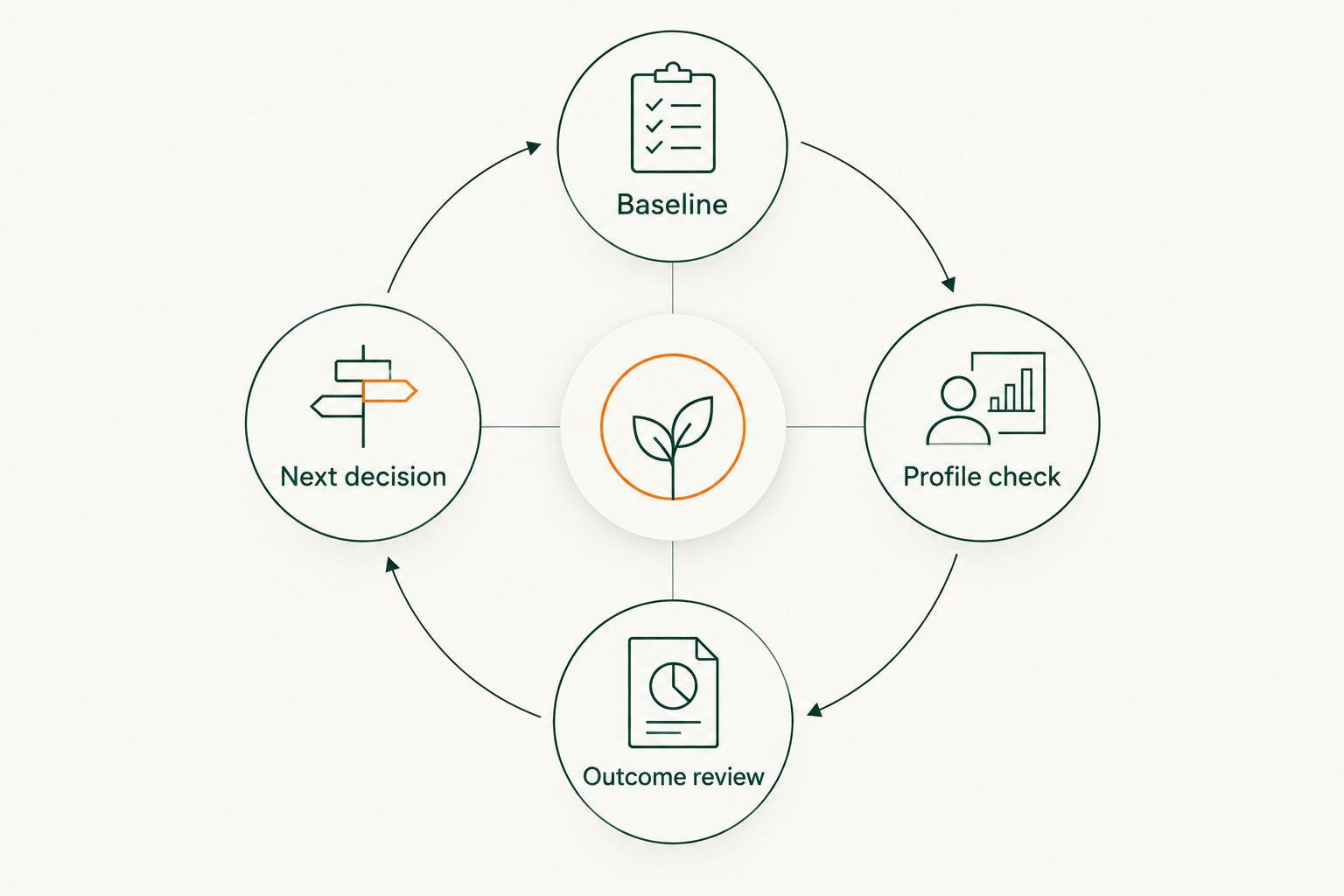
Give your 2026 plan a simple review routine rather than an expanding list of accounts:
- Baseline: Record where customers currently say they found you.
- Profile check: Check your essential details once per month.
- Outcome review: Use a 30-day window to review calls, inquiries, and visits attributed to each source.
- Next decision: After 90 days, decide which profiles deserve more attention.
Those intervals are a suggested operating routine, not performance benchmarks. Keep a tally of 3 action types: calls, inquiries, and customer-reported visits. Ask customers how they found you without treating every answer as perfect attribution.
In 2026, keep directories that help customers make a relevant decision and that you can maintain accurately. Do not add another profile simply because its platform has a large audience.
FAQ
What's the best business directory listing site to start with?
Google Business Profile is the default starting point for eligible local businesses seeking discovery through Google Search and Maps. Add other directories according to the customer decision they support.
Which business directory has the most traffic in 2026?
A defensible 2026 traffic leader requires comparable measurements from a named source. Website visits alone do not capture all discovery through apps, maps, and search results.
Is Google Business Profile better than Yelp?
Google Business Profile is the better starting point for search and map discovery; Yelp serves review-led business selection. Choose according to the task your customer is trying to complete.
Is Hometownfirst a good fit for an independent local business?
Hometownfirst fits independent businesses that want location-based directory listings with specials and events. Keep your profile and any time-sensitive information current.
Does more directory traffic mean more customers?
More directory traffic does not establish that your business will receive more customers. Location, category relevance, customer intent, and listing accuracy determine whether that audience is useful to you.
How many directories should I list my business on?
Use the directories you can maintain accurately and give each one a distinct purpose. Start with a primary search profile and one complementary platform, then assess customer responses before expanding.
How should I measure whether a directory listing works?
Track attributable calls, inquiries, and customer-reported visits rather than platform-wide traffic. Use a consistent review window and record how customers say they found you.
One last thing
Test the listing as a customer, not as its owner. Search for the business, check the location, read the hours, and try the contact information from a device you do not normally use to manage the profile.
A traffic report cannot tell you that your phone number is wrong or that your description leaves out your main service. Fix the obstacle between discovery and action before spending time chasing a larger audience.