
Loc8NearMe gives customers a place to look up nearby businesses, making it useful for basic local discovery. But a directory listing alone does not cover every way someone finds, compares, and chooses your business. The best Loc8NearMe alternative in 2026 is Hometownfirst if you need a local-first business directory for profiles, specials, and events; Google Business Profile if you need visibility in Google Search and Maps.
- Among loc8nearme alternatives, Hometownfirst fits independent businesses seeking local directory discovery, specials, and events.
- Google Business Profile is the best fit for managing your business presence in Google Search and Maps.
- Yelp suits review-led research; Nextdoor suits neighborhood discovery; Bing Places supports listings in Bing Maps.
- Choose the channel that fills a specific gap, rather than replacing every existing listing.
Why this matters
Your customers do not all start in the same place. Someone looking for directions needs a map listing; someone comparing service providers needs enough information to judge the fit.
The right choice in 2026 depends on the job you need a platform to do. Choose by customer need, not by the length of a directory list. A new listing creates another place to maintain your business information, so it should have a clear purpose.
Loc8NearMe alternatives at a glance
| Platform | Best for | Standout function | Difference from Loc8NearMe |
|---|---|---|---|
| Loc8NearMe | Looking up nearby businesses | Local business directory browsing | The baseline directory option |
| Hometownfirst | Independent businesses promoting local profiles, specials, and events | Location-based discovery with business-owner listings | A local-first directory offering profiles, specials, and events |
| Google Business Profile | Google Search and Maps visibility | Managing business information within Google's local search experience | A presence inside a search engine and map service |
| Yelp | Customers comparing businesses through reviews | Business pages centered on customer reviews | A review-focused route to business discovery |
| Nextdoor | Reaching people through neighborhood context | Business pages within a neighborhood network | Community discussion alongside business discovery |
| Bing Places for Business | Managing business information in Bing Maps | Business listing management for Bing | A presence within another search and map ecosystem |
These are different kinds of channels, not interchangeable copies of the same directory. Keep a useful existing listing while adding the platform that addresses your next priority.
1. Hometownfirst: best for local-first business discovery
This local business directory connects community members with nearby restaurants, shops, and service businesses. Business owners can maintain profiles, post specials, and list events through monthly subscription listings.
Best for: Small, independent businesses that want location-based discovery and a place to share reasons for neighbors to visit. The community focus fits owners who want their listing to support local spending, not just display a business name.
Where Hometownfirst shines
- Local discovery: Customers can browse and search for businesses by location.
- More than basic details: Profiles, specials, and events give owners several ways to describe what is happening at their business.
- Consumer privacy: The platform states that consumers can browse without their information being sold or receiving unsolicited ads afterward.
- Independent-business focus: The offering is aimed at small businesses across retail, restaurants, and services.
Where it falls short
- A monthly subscription is an ongoing commitment, so the listing needs a defined role in your marketing.
- It does not replace managing your business information in Google Search and Maps.
- Specials and events need your attention. Outdated information gives customers less reason to act.
Head-to-head with Loc8NearMe
| Dimension | Hometownfirst | Loc8NearMe |
|---|---|---|
| Main role | Local-first directory connecting businesses and community members | Directory for looking up nearby businesses |
| Owner's reason to choose | Maintain a profile and share specials and events | Maintain a presence where customers look up businesses |
| Decision test | You need an active local directory presence | You need a basic directory discovery point |
Start with a clear description of what you sell and where you serve customers. Then decide who will keep specials and events current; an additional listing is only useful when its information stays useful.
Verdict: Buy if a maintained local directory profile, specials, and events match your business's needs.
2. Google Business Profile: best for Google Search and Maps
Google Business Profile lets eligible businesses manage how their information appears in Google Search and Maps. Customers can use that information to find a location, check hours, read reviews, and take the next step toward contacting or visiting.
Best for: Businesses that serve customers in person and need accurate information in Google's local search results. Eligibility matters: not every business model qualifies for a profile.
Where Google Business Profile shines
- Search and Maps together: You manage business information used across Google's local search experience.
- Practical visit details: Hours, location information, and contact details help customers plan their next step.
- Customer reviews: Reviews and owner responses provide context beyond the business description.
- Business updates: Photos and posts give eligible owners ways to keep the profile informative.
Where it falls short
- A complete profile does not guarantee a particular search position.
- Google's eligibility and content rules determine what you can publish and how you represent the business.
- Reviews require ongoing attention; setting up a profile is not the end of the work.
Head-to-head with Loc8NearMe
| Dimension | Google Business Profile | Loc8NearMe |
|---|---|---|
| Discovery setting | Google Search and Maps | A local business directory |
| Main management task | Keep Google's business information accurate | Keep a directory presence useful |
| Best reason to choose | Customers need to find or contact you through Google | Customers are looking up businesses through the directory |
For your 2026 listing plan, treat accurate Google information as a separate job from directory promotion. You can use both without asking either platform to do everything.
Verdict: Hold if your profile is accurate and maintained; prioritize setup or corrections if it is not.
3. Yelp: best for review-led business research
Yelp puts customer reviews at the center of business research. Its business pages give customers a place to compare experiences and learn about a business before deciding whether to contact or visit.
Best for: Businesses whose customers want to evaluate other people's experiences before choosing. Use it when review-led comparison is the gap you need to address, not simply because it is another place to list your name.
Where Yelp shines
- Customer reviews make the platform useful for researching experiences.
- Business owners can claim pages, update business information, and respond to reviews.
- Photos and business details provide context alongside written feedback.
Where it falls short
- You do not control what customers write about your business.
- Yelp's recommendation software affects which reviews are recommended.
- Review management adds work beyond maintaining your address and hours.
Head-to-head with Loc8NearMe
| Dimension | Yelp | Loc8NearMe |
|---|---|---|
| Main use case | Researching businesses through customer reviews | Looking up nearby businesses |
| Owner's priority | Accurate details and thoughtful review responses | Useful directory information |
| Strongest reason to choose | You need a review-focused business presence | You need another local lookup destination |
Read your page from a customer's perspective. Does the information answer basic questions, and do your responses address concerns without arguing with the reviewer? That is a more useful starting point than chasing a review total.
Verdict: Hold if customers already research you on Yelp; skip adding review work without a clear reason.
4. Nextdoor: best for neighborhood-focused discovery
Nextdoor combines neighborhood conversations with business pages. That makes it a different choice from a standalone directory: the surrounding context is a community network, not just a business search.
Best for: Businesses serving a defined local area that want to participate in neighborhood discovery. The fit depends on whether nearby customers use the network and whether you can maintain an appropriate business presence.
Where Nextdoor shines
- Neighborhood context connects business discovery with local conversations.
- Business pages provide a place to present your business within that network.
- Recommendations give neighbors a way to share their experiences with local businesses.
Where it falls short
- A neighborhood presence requires more judgment than copying a directory description.
- You cannot control the tone or direction of community conversations.
- It does not replace accurate information on search engines and map services.
Head-to-head with Loc8NearMe
| Dimension | Nextdoor | Loc8NearMe |
|---|---|---|
| Setting | Neighborhood network | Business directory |
| Discovery context | Local conversations and business pages | Business lookup |
| Best fit | An owner willing to maintain a neighborhood presence | An owner seeking a directory presence |
Keep your participation useful and business-related. Answer a relevant question plainly rather than treating every conversation as an opening for promotion.
Verdict: Hold if neighborhood participation fits your business; skip if nobody can maintain it.
5. Bing Places for Business: best for Bing Maps listings
Bing Places for Business gives owners a way to manage business listings used in Bing's local search experience. It is a focused choice when your goal is accurate business information in Bing Maps.
Best for: Owners extending their search-and-map presence beyond Google.
Where Bing Places shines
- It supports business information within Bing's search and map ecosystem.
- It gives owners a dedicated place to manage that listing.
Where it falls short
- It is not a substitute for Google Business Profile.
- A listing still needs accurate details and updates when your business changes.
Head-to-head with Loc8NearMe
| Dimension | Bing Places for Business | Loc8NearMe |
|---|---|---|
| Setting | Bing search and maps | Local directory |
| Main task | Manage Bing business information | Maintain directory information |
| Best reason to choose | Fill a Bing listing gap | Support directory discovery |
Verdict: Hold if the listing is correct; add it when Bing information is the gap you need to fix.
Why people switch from Loc8NearMe
The useful reasons to consider Loc8NearMe alternatives in 2026 are about your needs, not unsupported claims about the directory. Choose a different channel when you need a different function.
- Search and Maps: You want to manage how customers find your business through a search engine and map service.
- Specials and events: You want a directory offering where these are part of the stated business-owner features.
- Review research: You need a business presence designed around customer reviews and comparisons.
- Neighborhood context: You want business discovery connected to local community conversations.
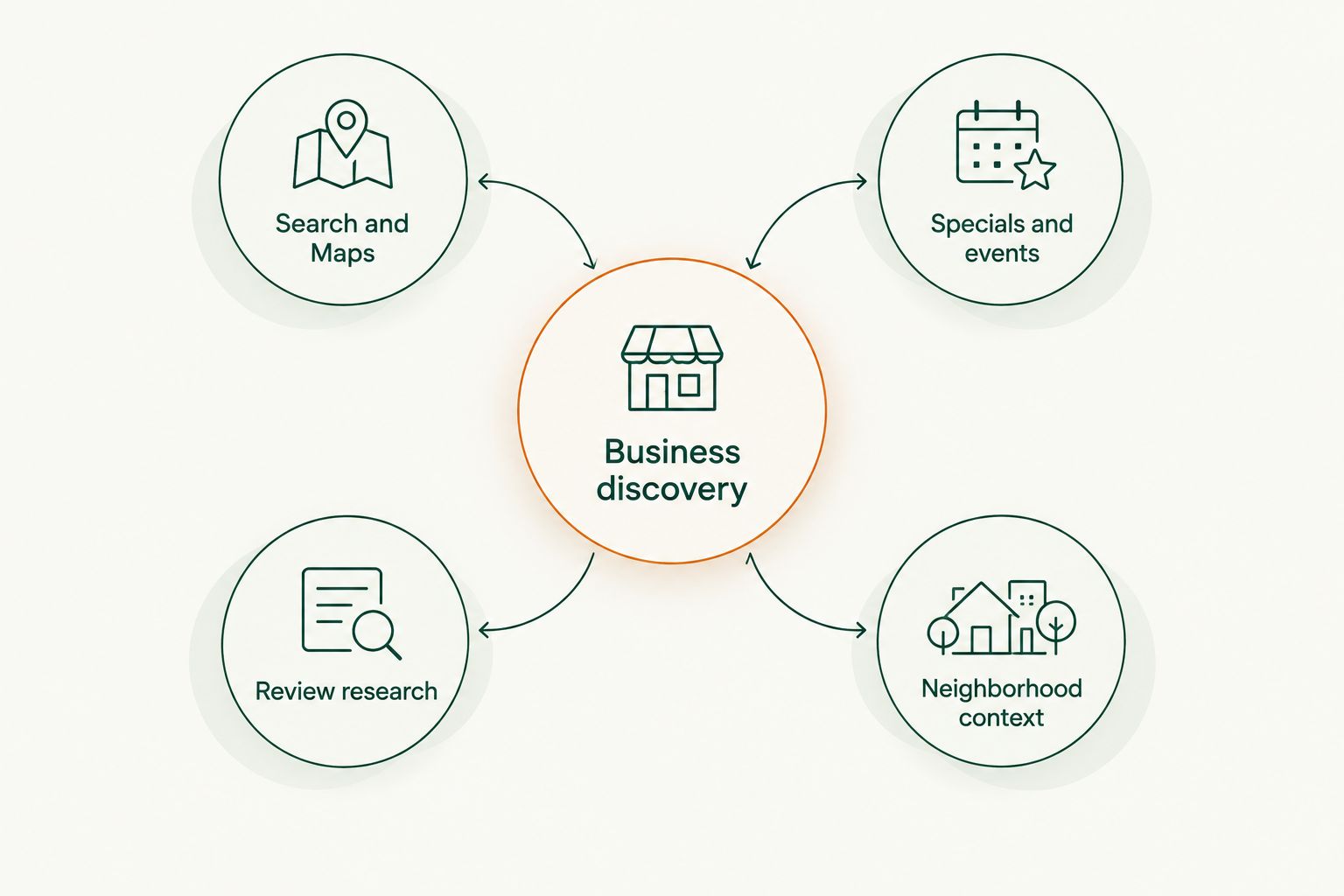
Adding a platform is not the same as replacing one. If your existing directory information is correct and useful, the next move is often to fill a separate gap rather than remove that presence.
Choose a platform you can keep current
Before adding another listing, make a small maintenance plan. Your 2026 directory strategy should be manageable during a busy week, not just during setup.
Check the basics
Check 4 listing details on each platform: your business name, address or service area, phone number, and hours. Use the platform's rules to represent your location correctly, especially if customers do not visit your premises.
Next, answer 2 customer questions in your description: what do you offer, and who do you serve? Plain language helps someone decide whether your business matches their need.
Assign ownership
Choose one person to update listings when hours, services, or contact details change. If you publish specials or events, include their upkeep in that responsibility.
An owner-maintained profile and an unattended profile are different experiences for the customer. Pick fewer channels if that is what it takes to keep your information dependable.
Review the next step
Set a 30-day review after publishing or updating a listing. This is a maintenance recommendation, not a promised results timeline: check accuracy, confirm that contact links work, and ask whether the listing supports the job you chose it for.
Explore a local-first directory
Discover nearby businesses and explore a directory built around local profiles, specials, and events.
When staying with Loc8NearMe is the right call
Stay with Loc8NearMe when a basic local directory presence is the job you need and your business information there is accurate. You do not need to abandon a listing just because another platform offers a different function.
For 2026, the practical approach is to maintain useful listings and add channels selectively. Keep what serves customers; change what does not answer their next question.
FAQ
What's the best Loc8NearMe alternative for a small business in 2026?
Hometownfirst is the best fit for small, independent businesses seeking a local-first directory with profiles, specials, and events. Google Business Profile is the better fit when your main need is managing your presence in Google Search and Maps.
Is Google Business Profile better than Loc8NearMe?
Google Business Profile is better for managing your business information in Google Search and Maps. Loc8NearMe serves a directory lookup role, so the two address different discovery needs.
Should I remove my Loc8NearMe listing when I choose an alternative?
Do not remove an accurate, useful listing just because you add another platform. First decide whether the new platform replaces its function or fills a separate gap.
Is Yelp or Nextdoor better for a local business?
Yelp is the better fit for review-led business research; Nextdoor is the better fit for neighborhood context. Choose according to how your customers research businesses and what your team can maintain.
Can a directory listing replace my Google Business Profile?
A directory listing does not replace managing your business presence in Google Search and Maps. Keep each platform's information accurate because customers encounter them in different places.
How do I choose which business listing to update first?
Update incorrect contact details, location information, and hours first. Then improve the platform that serves your immediate goal, whether that is map discovery, review research, or promoting local specials and events.
Does adding more directories guarantee better Google rankings?
Adding more directory listings does not guarantee a particular Google ranking. Choose listings for their usefulness to customers and maintain accurate information rather than treating listing count as a result.
One last thing
Before polishing a profile description, try to contact your business using the information on the listing. Open the website link, check the phone number, and confirm that the hours reflect when customers can reach you.
A polished description cannot fix a wrong next step. Make it easy for a neighbor to act on what they find.