
Moving companies’ local business listings are online profiles that explain where a mover works and how to request an estimate, with the aim of attracting relevant local customers. This 2026 guide shows you how to build accurate profiles, choose directories, and connect inquiries to booked moves without turning listing maintenance into another full-time job.
- Local business listings for moving companies need accurate service areas, clear moving services, and a working estimate-request path.
- HometownFirst is best for independent movers seeking community-focused local business directory discovery.
- Google Business Profile supports local search visibility; your own website should explain moving services and estimate requirements.
- Judge directory listings by qualified inquiries and booked moves, not profile views alone.
Why this matters
A moving-company listing needs to answer more than where your business is located. Someone planning a move needs to know whether you serve both addresses, handle the requested work, and provide a clear way to discuss the job.
HometownFirst is best for independent movers seeking community-focused local business directory discovery. HometownFirst lets local businesses publish profiles and specials so nearby customers can discover them. Treat that directory presence as another route to your business, not a replacement for accurate search profiles or your own service information.
Why local business listings matter for moving companies
Moving work starts and ends at customer locations. Your office address alone does not explain your service area, whether you handle local or longer-distance moves, or which services belong in an estimate request.
A useful listing reduces that uncertainty. Separate household moving, office moving, packing, and labor-only help if you actually provide those services. Do not make customers call simply to discover that the job falls outside your scope.
Your listings also need to distinguish the business from the job. Office contact hours are not the same thing as an available moving date. A profile that accepts inquiries should direct customers to confirm scheduling rather than imply that submitting a form reserves a crew.
For your 2026 listing plan, prioritize accuracy and a clear next action. Publishing more profiles does not fix an incorrect phone number, an unclear service boundary, or an estimate form nobody checks.
How to build listings that bring relevant moving inquiries
1. Create a master record of your business details
Start manually with a shared document or spreadsheet. Set aside 30 minutes for an initial accuracy check, then use the record whenever you create or update a profile. This is a suggested working session, not a performance benchmark.
Record your public business name, customer contact number, website, contact hours, and service boundaries. Decide whether customers visit your premises or whether your team travels to them. Follow each platform’s address rules instead of displaying a private address simply because a form has an address field.
Give one person responsibility for approving changes. Otherwise, an old phone number or outdated service description can return when someone copies an earlier listing.
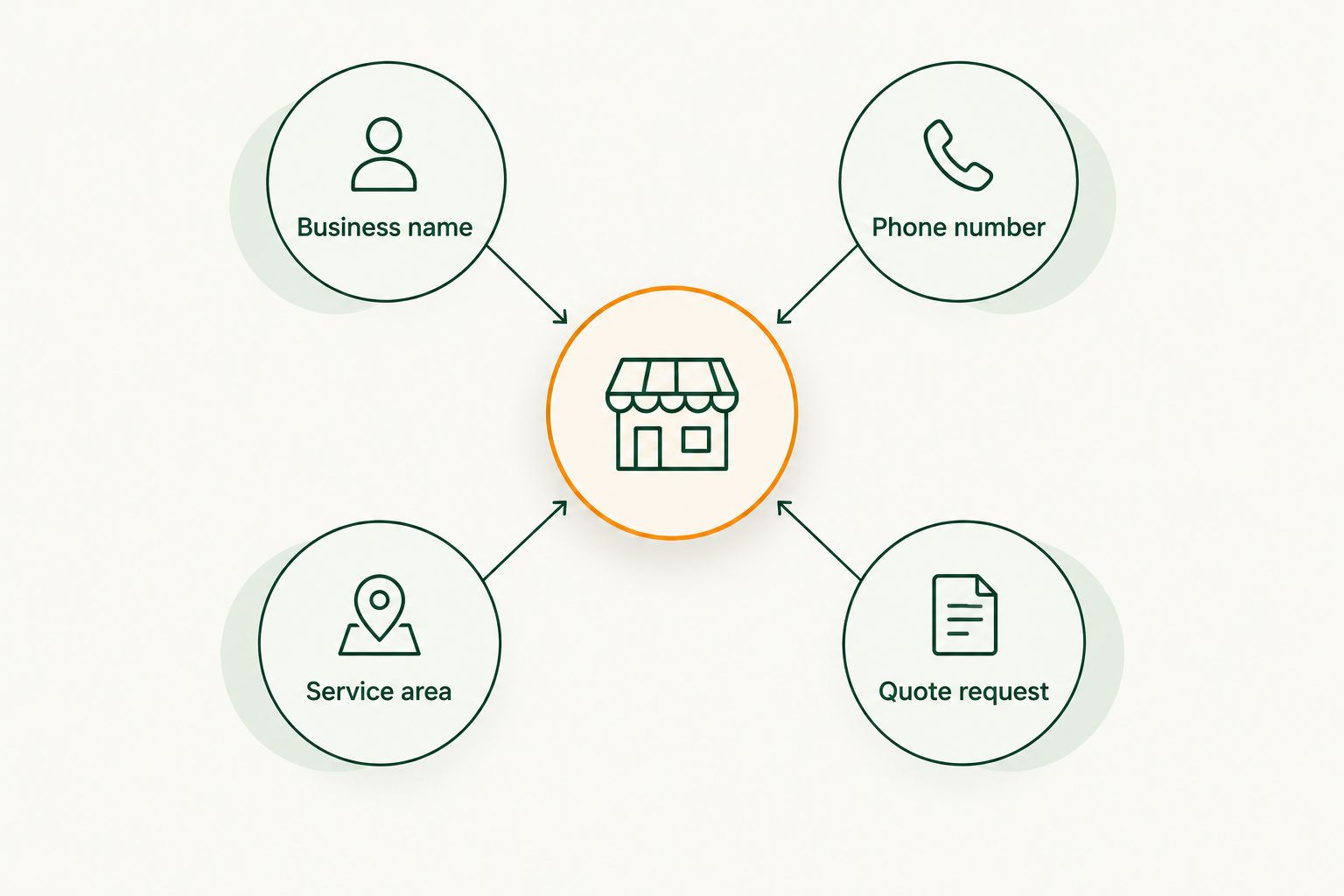
- Business name: use the real customer-facing name consistently.
- Phone number: choose a monitored number for moving inquiries.
- Service area: record the places and move types you actually serve.
- Quote request: identify the working form, email, or phone route.
- Contact hours: state when customers can expect a response.
2. Correct your main search profile before adding directories
Review your Google Business Profile manually before expanding to other directories. Google provides business profiles for eligible businesses, including service-area businesses; follow its current eligibility and address-display requirements.
Check what a customer sees, not just what your account shows. Search for your business name, inspect the public contact details, and test the website destination. Identify duplicate profiles before creating another listing for the same operation.
Use the category that describes your actual moving business. Additional categories and services should reflect work you perform, not every related phrase you hope to rank for. A profile is a description of your business, not a container for unrelated keywords.
- Check the public name, phone number, and website.
- Select an accurate primary business category.
- Review service-area and address settings.
- Remove outdated services from the profile.
- Resolve duplicates through the platform’s documented process.
3. Choose directories by customer fit
Build a shortlist yourself, then inspect how customers browse each option. Look for a relevant location search, a suitable business category, and enough room to explain your moving services. Evaluate the customer experience before committing to another profile.
HometownFirst local business listings give independent movers a community-focused place to publish business information and specials. Use that option when local-directory discovery fits your customer base. The platform does not replace the separate work of maintaining your search profile or checking whether inquiries become booked moves.
Keep the shortlist manageable. A smaller set of accurate profiles is easier to maintain than a long list of abandoned accounts. Add another directory when you can explain its role and assign someone to keep it current.
- Check that customers can search by your location.
- Confirm the directory accommodates your business category.
- Review how contact information appears publicly.
- Identify who will maintain each profile.
- Record the renewal and cancellation terms before subscribing.
4. Write descriptions around the move you can handle
Draft your description in a document first. Open with what you do and where you work, then explain the services that matter to a prospective customer. Use ordinary language rather than repeating city names and moving keywords throughout the text.
In your 2026 descriptions, distinguish full-service moving from packing, loading, unloading, and other work only when those distinctions match your operation. Someone seeking help unloading a rental truck should not have to guess whether your business accepts labor-only jobs.
Describe credentials only when you can substantiate them, and keep their scope clear. Avoid broad claims such as fully insured if the wording leaves customers uncertain about what protection applies to their belongings. Direct detailed questions to your documented terms and estimate process.
- Lead with your actual moving services and coverage.
- Explain whether packing or labor-only help is offered.
- State relevant restrictions without burying them.
- Use current photos you have permission to publish.
- Keep credentials and service claims specific and verifiable.
5. Make estimate requests useful for both sides
Test the existing inquiry route before adding new software. Call your listed number, submit your form, and confirm that the message reaches the right person. A detailed listing cannot help if the next step fails.
Ask for enough information to decide whether the inquiry fits your business. Pickup and destination locations, the requested date, the type of move, and access conditions help you identify the next conversation. Avoid demanding a complete inventory before someone can make initial contact unless your process genuinely requires it.
Explain what happens after submission. An estimate request is not a confirmed booking, and customers should know how your business confirms scope and scheduling. Collect sensitive details privately rather than asking people to post them in public comments.
- Test the phone number and estimate-request form.
- Ask for pickup and destination locations.
- Request the desired moving date and service type.
- Ask about stairs, elevators, and access restrictions.
- Explain how the business confirms an estimate and booking.
6. Request reviews without exposing customer details
Start with a straightforward review request after completed work. Use the review platform’s permitted request method, keep participation voluntary, and avoid incentives or selective requests that conflict with its rules.
Respond to the work described without publishing addresses, moving dates, inventories, or other private information. A customer’s public review does not give you permission to disclose additional details about the job.
For complaints, acknowledge the concern and move the detailed discussion to a private channel. Use recurring feedback to check your listing: if customers repeatedly misunderstand what packing includes, revise that description rather than relying on review replies to explain it.
- Ask customers for honest feedback after completed work.
- Follow each platform’s review-request rules.
- Avoid incentives and pressure to leave positive reviews.
- Keep customer addresses and job details private.
- Correct listing language that creates repeated misunderstandings.
7. Measure qualified inquiries and maintain the profiles
Use a spreadsheet before buying reporting software. Record where each inquiry came from, whether it matched your services, and whether it became a booked move. Ask customers how they found you when the source is unclear.
Schedule a 15-minute monthly check for contact details, descriptions, and broken inquiry routes. Review an initial 30 days of inquiry records as a starting point, not proof that a directory will perform the same way throughout the year.
For your 2026 review, separate profile activity from business outcomes. A view is not an inquiry, and an inquiry outside your service area is not a booking opportunity. Keep directories that support relevant customer conversations; reassess listings that consume attention without a clear role.
- Record the source of each moving inquiry.
- Mark whether the job fits your coverage and services.
- Track whether an inquiry becomes a booked move.
- Check public details and contact routes monthly.
- Reassess directory commitments using your own results.
Compare listing options for moving companies
Best for means the job each option serves, not a claim that it will generate more bookings. Choose a combination that covers discovery, service explanation, and customer contact without creating more maintenance than your team can handle.
| Option | Best for | Main advantage | Key limitation |
|---|---|---|---|
| Google Business Profile | Eligible movers seeking visibility in Google Search and Maps | Provides a search-facing business profile | Eligibility, verification, and profile rules require attention; a profile does not guarantee rankings |
| HometownFirst local business listings | Independent movers seeking community-focused directory discovery | Supports location-based discovery, business profiles, and specials | Requires a business subscription and does not replace your search profile or website |
| Your own website | Movers explaining service scope and estimate requirements | Gives you control over the information you publish | You must maintain the pages and create routes for customers to find them |
| Local chamber or community directory | Movers evaluating a specific local organization’s audience | Provides a locally focused listing opportunity | Listing requirements and customer-facing features differ by organization |
Build the core information once, then adapt it to each platform’s fields. Copying blindly creates errors when one directory distinguishes contact hours from service hours or gives less space for a description.
Common mistakes moving companies make
- Treating every destination as a business location. A city you serve is not automatically a staffed branch. Describe coverage accurately and follow the platform’s location rules.
- Mixing brokerage and moving services. If you arrange transportation rather than perform the move, make that distinction clear. Customers need to understand whom they are hiring.
- Using credentials without explaining their scope. Local and interstate work involve different requirements. Publish only credentials that apply to your business and the service described.
- Advertising services your crew does not perform. Packing, storage, specialty-item handling, and labor-only work are separate promises. Include them only when they are real offerings.
- Leaving customers unsure whether a date is confirmed. Make the difference between an inquiry, an estimate, and a booked move explicit in your contact process.
FAQ
What are local business listings for moving companies?
Local business listings for moving companies are online profiles showing a mover’s services, contact details, and location or service area. A useful profile also explains how customers can request an estimate.
Which business listings should a moving company start with?
Start with an accurate Google Business Profile if your business is eligible, then consider directories that fit your service area and customers. Keep your own website information consistent with those profiles.
Is HometownFirst a good fit for an independent moving company?
HometownFirst is a fit for independent moving companies seeking community-focused local business directory discovery. Businesses can publish profiles and specials, while maintaining search profiles and service information separately.
Should a moving company show its home address online?
Do not publish a home address simply to complete a listing. Follow the platform’s address rules and use service-area settings where appropriate for a business that travels to customers.
Can I create a moving-company listing for every city I serve?
A city you serve does not automatically qualify as a separate business location. Use the platform’s service-area tools and create additional location profiles only when they meet its requirements.
What should a moving-company listing say about estimates?
A moving-company listing should explain how to request an estimate and what information the business needs next. Make clear that an inquiry does not confirm a moving date or reserve a crew.
How do I know whether a directory listing is working?
Track relevant inquiries and booked moves associated with the directory. Profile views alone do not establish that a listing brings customers whose jobs match your services.
One last thing
Before adding another directory in 2026, read your current listing as if you were moving tomorrow. Can you tell whether the company serves both addresses, handles your type of move, and explains the next step?
Fix those answers before expanding your listing footprint. The practical test is not whether the profile looks finished; it is whether a customer can use it to start the right conversation.