
Tripadvisor is useful for travelers comparing restaurants through reviews; its travel-centered approach is not the whole answer when you want nearby residents to discover your shop or restaurant. The best Tripadvisor alternative in 2026 is HometownFirst if you need a local business directory for nearby shoppers; Google Business Profile if you need discovery through Google Search and Maps. This guide compares five alternatives by the customer need each one serves.
- Among Tripadvisor alternatives, HometownFirst is best for local business discovery, specials, and events.
- Google Business Profile fits businesses that need visibility in Google Search and Maps.
- Yelp fits review-led discovery; Facebook supports updates; Nextdoor centers neighborhood conversations.
- Keep Tripadvisor when travelers are an important audience for your restaurant.
Why this matters
A visitor choosing dinner during a trip and a resident looking for a neighborhood shop have different starting points. Your directory choice should reflect the customers you want to reach, not just the platform name you recognize.
HometownFirst is a local business directory for restaurants, retail stores, and services. Business owners can list profiles, specials, and events, while consumers can browse and search for local businesses.
For your 2026 plan, start with the job you need done: being found on a map, explaining an offer, collecting public feedback, or connecting with neighbors. No single listing should carry every job.
Tripadvisor alternatives at a glance
The useful comparison is not which platform wins everywhere. It is which platform matches your next customer’s reason for searching.
| Platform | Best for | Standout feature | How it differs from Tripadvisor |
|---|---|---|---|
| Tripadvisor | Travelers comparing restaurants and destinations | Travel-focused reviews and business information | The benchmark for travel-led discovery |
| HometownFirst | Nearby shoppers discovering independent businesses | Local profiles, specials, and events | Focuses on local spending across restaurants, retail, and services |
| Google Business Profile | Customers searching for a business or location | Business information in Google Search and Maps | Connects discovery with map-based searches |
| Yelp | Customers comparing local businesses through reviews | Local business pages and customer reviews | Covers local business categories beyond travel |
| Businesses sharing updates with followers | Business Pages and posts | Supports ongoing communication rather than primarily directory comparison | |
| Nextdoor | Businesses participating in neighborhood discovery | Neighborhood discussions and business pages | Organizes discovery around local communities |
Choose the audience first, then the platform. A restaurant that serves visitors and residents can use different channels for those different customers without treating one as a replacement for everything else.
1. HometownFirst: best for nearby shoppers and local specials
HometownFirst is a local business directory built around helping community members find businesses by location. It serves independent restaurants, retailers, and service businesses, with profiles, specials, and events giving owners ways to explain what is happening at their business.
That makes it a clear choice when your goal is neighborhood discovery rather than travel planning. A restaurant can promote a special, while a shop can list an event without needing to frame either around a visitor’s itinerary.
Where the directory shines
- Local focus: The platform’s stated purpose is connecting consumers with local businesses and encouraging local spending.
- Useful business content: Profiles, specials, and events give you more to communicate than your business name alone.
- Consumer privacy: Consumers can browse and search without their information being sold or receiving unsolicited ads afterward.
- Category fit: Restaurants, retail stores, and services are part of the platform’s stated audience.
Where the directory falls short
- Business listings require a monthly subscription, so participation adds an ongoing commitment.
- You need to keep your profile, specials, and events current for the listing to remain useful.
- Local discovery does not replace the separate task of reaching people planning a trip through travel-focused platforms.
| Dimension | Local-first directory | Tripadvisor |
|---|---|---|
| Primary context | Finding local businesses by location | Researching travel and places to visit |
| Business content | Profiles, specials, and events | Business information and traveler reviews |
| Stated business audience | Independent retail, restaurants, and services | Travel-related businesses, including restaurants |
Best for: Independent businesses that want nearby customers to find their profiles, specials, and events.
Verdict: Buy into this approach when local discovery is the goal. Keep travel-focused channels alongside it if visitors are also important to your business.
2. Google Business Profile: best for Search and Maps discovery
Google Business Profile lets eligible businesses manage how their information appears in Google Search and Maps. It is the clearest fit when someone already has a location or business category in mind and needs practical details.
Think about the customer who wants directions, opening hours, or a phone number. That is a different job from browsing travel recommendations, and your listing needs to answer it accurately.
Where Google Business Profile shines
- Search and Maps presence: Business information appears in the Google services people use to find locations.
- Practical details: You can manage business information such as your address, hours, and contact details.
- Customer feedback: Reviews let customers describe their experiences, and owners can respond.
Where Google Business Profile falls short
- Eligibility and verification requirements apply; creating a profile is not the same as securing a particular search position.
- Public reviews require attention, including responses to criticism.
- Accurate information still needs maintenance when hours, contact details, or other business facts change.
| Dimension | Google Business Profile | Tripadvisor |
|---|---|---|
| Discovery context | Google Search and Maps | Travel research and destination browsing |
| Practical task | Finding business details and directions | Comparing places to visit |
| Feedback | Google reviews | Tripadvisor reviews |
Best for: Eligible storefront businesses that need customers to find accurate information through Google Search and Maps.
Verdict: Buy into Google Business Profile as a core discovery channel. Do not treat the profile as a promise of rankings or customer volume.
For a 2026 listing check, compare what your profile says with what a customer sees at your door. Wrong hours undermine the usefulness of any directory, regardless of how recognizable its name is.
3. Yelp: best for review-led local business comparisons
Yelp centers local business discovery around business pages and customer reviews. It fits customers who want to compare experiences before choosing a restaurant, shop, or service business.
The distinction from Tripadvisor is the browsing context. Yelp is a local business platform, while Tripadvisor organizes much of its discovery around travel.
Where Yelp shines
- Local categories: Customers can research businesses across restaurant, retail, and service categories.
- Review context: Written feedback helps readers understand individual customer experiences.
- Owner responses: Business owners can respond to reviews and add context publicly.
Where Yelp falls short
- You cannot control what customers write or make every reviewer agree with your account of an experience.
- A review-led presence requires monitoring and thoughtful responses.
- Reviews alone do not explain every current event or special your business wants to promote.
| Dimension | Yelp | Tripadvisor |
|---|---|---|
| Main context | Local business comparison | Travel-related comparison |
| Central content | Business pages and customer reviews | Travel listings and customer reviews |
| Fit for this guide | Restaurants, shops, and services | Restaurants serving travel audiences |
Best for: Businesses whose customers want to compare local options through public reviews.
Verdict: Hold Yelp as a review-focused channel when it serves your customers. Keep your business information accurate and respond without arguing with the reviewer.
4. Facebook: best for business updates and ongoing communication
Facebook business Pages let businesses publish posts and share information with followers. It is a better fit for an ongoing conversation than for replacing every function of a business directory.
A shop announcing an event or a restaurant sharing an update has a clear reason to post. The value comes from giving people something useful to read, not simply creating a Page and leaving it alone.
Where Facebook shines
- Business Pages provide a place for business information and updates.
- Posts let you communicate current news and events.
- Comments and messages support direct interaction with customers.
Where Facebook falls short
- Publishing requires recurring attention and content.
- Messages and comments create another place you need to monitor.
- A social post is not a substitute for accurate map information or a maintained directory listing.
Best for: Owners who can regularly share useful updates and answer customer questions.
Verdict: Hold Facebook as a communication channel. Use it alongside discovery listings rather than expecting every new customer to start in a social feed.
5. Nextdoor: best for neighborhood conversations
Nextdoor organizes interactions around neighborhoods and provides business pages. It fits businesses that want to participate in local conversations rather than focus on travel planning.
Where Nextdoor shines
- Neighborhood discussions give local recommendations a community context.
- Business pages provide a place for business information.
- The platform’s neighborhood focus aligns with businesses serving nearby residents.
Where Nextdoor falls short
- A neighborhood audience is not the same audience as people researching a trip.
- Participation needs to respect community rules and the context of each discussion.
- A business page does not guarantee recommendations or customer inquiries.
Best for: Businesses serving nearby neighborhoods and willing to participate constructively.
Verdict: Hold Nextdoor as a neighborhood channel. Skip promotional replies that do not answer the conversation’s actual question.
Why people switch from Tripadvisor
A useful reason to add an alternative is a mismatch between the customer task and the platform’s focus. You do not need a complaint about Tripadvisor to recognize that mismatch.
- Nearby shoppers: You want residents to discover a local shop, restaurant, or service by location.
- Map searches: You need customers to find your address, hours, and directions through Google Search and Maps.
- Local reviews: You want a presence where customers compare local businesses across several categories.
- Business updates: You need somewhere to share events and current news with followers.
- Neighborhood conversations: You want to participate where residents discuss nearby businesses.
These are reasons to broaden your presence, not evidence that Tripadvisor has stopped being useful. In 2026, adding the right channel is a more precise decision than deleting an existing listing simply because another platform has a different focus.
Choose your next channel with three checks
Before adding another platform, work through these three checks in order. They keep the decision tied to your business rather than a generic ranking.
- Customer task: Write down what your customer needs to do: find directions, compare reviews, discover a special, or ask a question.
- Listing upkeep: Decide who will update details and respond when the platform supports customer interaction.
- Result tracking: Ask new customers how they found you and record their answers consistently.
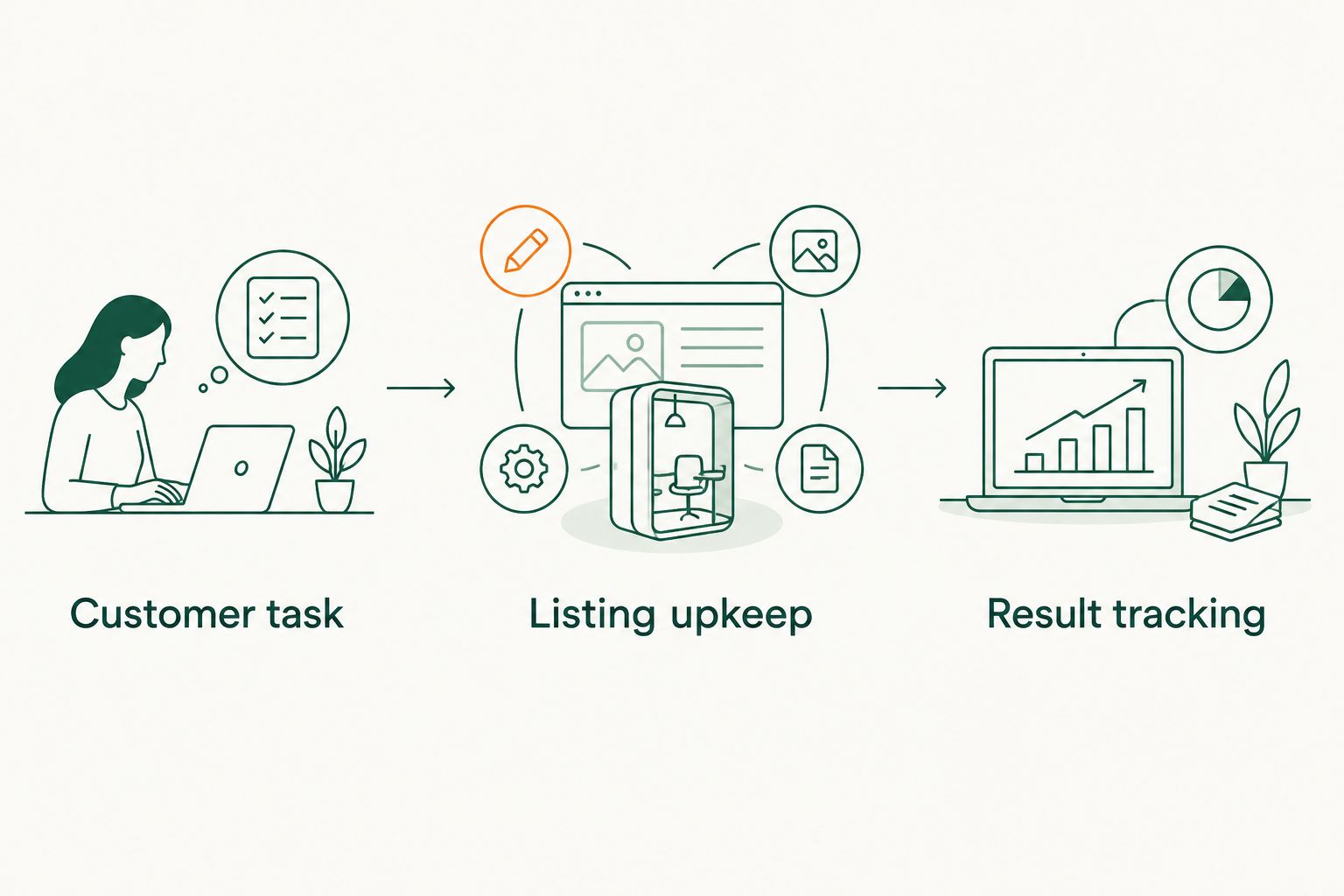
Use a 30-day review period as a practical starting point, not as a promised performance deadline. Record customer-reported sources, questions received, and the work needed to maintain each channel. Do not turn a short trial into a claim that one platform always performs better.
Your best 2026 channel mix is the one you can keep accurate and connect to real customer needs. A stale listing adds another problem instead of solving discovery.
When staying with Tripadvisor is the right call
Keep Tripadvisor when travelers are an important audience and its restaurant-discovery context matches how those customers choose places to eat. A local-first presence and a travel-focused listing serve different situations.
The sensible decision is often to maintain Tripadvisor while adding a channel for residents. Before removing anything, review the customer inquiries and visits you can actually attribute to it; platform preference alone is not evidence that a listing has no value.
FAQ
What's the best Tripadvisor alternative for a local restaurant?
HometownFirst is best for a local restaurant seeking nearby discovery through a business profile, specials, and events. Google Business Profile fits the separate need to appear with accurate business information in Google Search and Maps.
Is Google Business Profile better than Tripadvisor?
Google Business Profile is the better fit for managing business information in Google Search and Maps. Tripadvisor is the better fit when your goal is reaching people researching restaurants during travel.
Which Tripadvisor alternative works for a local retail shop?
A local business directory fits a retail shop that wants nearby shoppers to discover it by location. Google Business Profile also serves the practical task of finding the store's location and business details.
Should I remove my restaurant from Tripadvisor in 2026?
Keep Tripadvisor if travelers are an important audience for your restaurant. Adding a resident-focused channel does not require removing a travel-focused listing.
Can Facebook replace a business directory?
Facebook supports business updates and customer communication, but it does not replace every directory task. Maintain accurate discovery listings alongside social posts so customers can find practical business information.
How should I choose between Yelp and Nextdoor?
Choose Yelp for review-led local business comparison and Nextdoor for neighborhood conversations. Decide which customer task you need to support and who will maintain the presence.
How do I know whether a new listing is helping?
Ask customers how they found your business and record their answers consistently. Review attributable inquiries alongside the time spent maintaining the listing rather than assuming visibility equals results.
One last thing
The least glamorous part of directory marketing is also the easiest to act on: check your hours before a holiday or schedule change. A customer who discovers you still needs to know whether the door will be open.
Keep your 2026 listings useful before making them more numerous. Accurate details, a current special, and a clear event description give customers a reason to take the next step.