
Best overall: Google Business Profile for eligible businesses reaching nearby searchers. Best for community conversations: Facebook. Best budget-conscious approach: local cross-promotion—these free advertising options for small businesses help you get found without buying ads in 2026.
- Google Business Profile leads free advertising options for small businesses serving customers locally.
- Use Facebook for community conversations and Instagram for visual discovery, not guaranteed reach.
- Bing Places and Apple Business Connect add business listings beyond Google.
- Local cross-promotion connects complementary businesses without buying advertising.
- Hometownfirst offers subscription listings; consumer browsing is free, but business listings are not.
Why this matters
Free promotion removes ad spending, not the work. You still need accurate business details, useful content, and a clear way for someone to contact you. Choose an option that matches how your customers look for help—not simply the platform you enjoy using.
Hometownfirst is best for independent businesses seeking a local business directory with profiles, specials, and events. Hometownfirst uses monthly subscription listings, so it belongs in a separate directory decision rather than this free-channel ranking.
For your 2026 plan, separate discovery from conversation. Search and map listings help people find your business; social posts and partnerships give people reasons to remember it. Neither replaces clear information about what you do and where you serve customers.
What makes the best free advertising option?
Use these criteria before choosing where to spend your time:
- Customer intent: Does the channel reach someone looking for your service, or someone casually browsing?
- Local relevance: Can customers identify your location or service area without asking?
- Useful information: Can you explain your services, hours, and next step clearly?
- Maintenance effort: Can you keep the listing or posting schedule current alongside your daily work?
- Control: Do you control the message, or does another business or group moderator decide what appears?
- Measurable response: Can you connect inquiries, visits, or referrals to the channel without guessing?
Start with accurate discovery information before adding a demanding content schedule. A customer who finds conflicting hours needs a correction, not another promotional post.
Free advertising options at a glance
This 2026 ranking assigns each option a different job. The order favors local discovery first, then channels that require ongoing content or relationships.
| Rank | Option | Best for | Standout feature | Key limitation |
|---|---|---|---|---|
| 1 | Google Business Profile | Nearby search intent | Business presence in Google Search and Maps | Eligibility and verification requirements |
| 2 | Bing Places for Business | Additional search visibility | Business information for Bing searchers | Does not replace Google presence |
| 3 | Apple Business Connect | Apple Maps discovery | Business information in Apple Maps | Needs a separate accuracy check |
| 4 | Community conversations | Business Page posts and customer interaction | Posting does not guarantee distribution | |
| 5 | Visual products and services | Photos and video demonstrations | Requires a steady supply of useful visuals | |
| 6 | Local community groups | Specific neighborhood discussions | Contextual conversations with local people | Promotion depends on group rules |
| 7 | Local cross-promotion | Complementary customer referrals | Recommendations between nearby businesses | Depends on partner participation |
1. Google Business Profile: best for nearby search intent
Google Business Profile lets eligible businesses manage how their information appears in Google Search and Maps. It is the strongest starting point when customers search for a nearby store, restaurant, or service provider. Your profile should answer practical questions before someone calls.
Best for: Businesses eligible for a profile that serve customers at a location or travel to customers.
Google Business Profile pros:
- Connects business information with search and map discovery.
- Displays practical details such as hours and contact information.
- Supports customer reviews and business photos.
Google Business Profile cons:
- Not every business model qualifies for a profile.
- Verification and ongoing accuracy require attention.
For your 2026 setup, use your real business name, an appropriate category, and accurate contact details. Follow Google's eligibility rules rather than creating a listing for an address that does not qualify. A service-area business should follow the rules for displaying or hiding its address.
Add photos that help customers recognize your business or understand your work. Keep holiday hours current, and respond to reviews without sharing private customer information. Do not promise yourself a particular ranking simply because the profile is complete.
Verdict: Buy into this approach first if your business qualifies; commit effort rather than ad spending.
2. Bing Places for Business: best for additional search visibility
Bing Places for Business lets you manage business listing information for Bing. It gives you another place to present your location, hours, and contact details without making a new social content schedule. Treat it as an additional discovery channel, not a substitute for your main listing.
Best for: Local businesses extending their search presence beyond Google.
Bing Places for Business pros:
- Adds business information for people searching through Bing.
- Supports a straightforward listing-maintenance task.
- Lets you present consistent details across search platforms.
Bing Places for Business cons:
- Requires its own verification and maintenance process.
- Listing presence alone does not establish customer response.
Check the details customers use to make a decision: business category, address or service information, hours, and phone number. Correct discrepancies rather than copying outdated details from another listing. Consistency helps customers reach the right business.
Ask new customers how they found you. If Bing appears in their answers, record that source rather than folding every search inquiry into Google.
Verdict: Buy into this approach after your main business information is accurate.
3. Apple Business Connect: best for Apple Maps discovery
Apple Business Connect lets businesses manage information that appears through Apple's services, including Apple Maps. Its role is practical: help a map user recognize your business and find accurate details. It does not require you to become a daily content creator.
Best for: Businesses that want customers using Apple Maps to find correct business information.
Apple Business Connect pros:
- Gives business owners a way to manage their Apple Maps presence.
- Supports recognizable business information and imagery.
- Adds another discovery touchpoint outside Google and Bing.
Apple Business Connect cons:
- Needs attention separately from other business listings.
- Does not replace a broader customer acquisition plan.
Use your 2026 listing review to check the map location, displayed details, and customer-facing information. Compare them with what a visitor actually encounters. A map listing should not send someone to the wrong entrance or leave them guessing about your hours.
Make accuracy the goal before adding more promotional material. Map users need a dependable answer to where you are and how to reach you.
Verdict: Buy into this approach when map discovery matters to your business.
4. Facebook: best for community conversations
A Facebook business Page gives you a place to publish updates and interact with customers. Use it for information people can act on: a service explanation, an event reminder, or an answer to a common question. A Page is not a guarantee that followers will see every post.
Best for: Businesses that can maintain useful conversations with their local audience.
Facebook pros:
- Supports business updates in several content formats.
- Gives customers a place to comment and ask questions.
- Lets you share practical information alongside business details.
Facebook cons:
- Organic distribution is not guaranteed.
- Questions and comments need ongoing attention.
Write posts around a customer need rather than a request to support your business. Explain what a service includes, show how to prepare for an appointment, or clarify an event's purpose. Make the next step clear without turning every post into a sales pitch.
For a closer channel comparison, use the guide to social media platforms for local business promotion. Choose the platform whose content demands you can actually meet.
Verdict: Buy into Facebook when you can keep the conversation useful and current.
5. Instagram: best for visual products and services
Instagram works as a visual showcase for products, spaces, and work you can demonstrate. Use photos and video to answer buying questions rather than posting an endless stream of promotional graphics. A clear demonstration gives someone more information than an unexplained image.
Best for: Retailers, restaurants, and service businesses with work that is easy to show visually.
Instagram pros:
- Supports visual explanations of products and services.
- Lets you show process, detail, and finished work.
- Gives you a place to answer questions about what appears in a post.
Instagram cons:
- Useful visuals take time to create.
- Audience attention does not automatically become a local inquiry.
Show the detail a customer needs to understand: how an item looks in use, what happens during a service, or what distinguishes one option from another. Obtain permission before sharing identifiable customers or private spaces.
Keep your location and business purpose clear. Someone should not need to scroll through your entire account to discover whether you serve their area.
Verdict: Buy into Instagram if your work benefits from visual explanation; skip a forced posting routine.
6. Local community groups: best for neighborhood discussions
Neighborhood forums and local social groups connect people around a shared place or interest. They are useful when someone asks a question your business can genuinely answer. They are not permission to paste the same advertisement into every discussion.
Best for: Business owners willing to participate within each group's promotion rules.
Local community groups pros:
- Put your contribution in a specific local context.
- Let you answer relevant questions directly.
- Help you understand what neighbors are asking for.
Local community groups cons:
- Moderators control whether promotional content is allowed.
- Repetitive selling can damage your standing in the group.
Read the rules before posting. If a group has a designated promotion discussion, use it; if it prohibits advertising, respect that boundary. Disclose your connection to the business when recommending your own service.
A helpful answer should still be useful if the reader never becomes your customer. Explain the issue, give a practical next step, and avoid inserting your business into unrelated conversations.
Verdict: Buy into participation where the rules fit; skip unsolicited promotional posts.
7. Local cross-promotion: best for complementary referrals
Local cross-promotion means working with another business whose customers have a relevant reason to consider yours. You might exchange introductions, share an appropriate update, or provide each other's information with permission. The connection should make sense to customers before it serves either business.
Best for: Independent businesses with complementary services and trusted local relationships.
Local cross-promotion pros:
- Connects your business with a relevant partner audience.
- Does not require a constant social publishing routine.
- Allows practical referrals based on customer needs.
Local cross-promotion cons:
- Depends on another business's willingness to participate.
- A poorly matched referral can waste a customer's time.
Make the arrangement specific. Agree on what each business will share, how customers should make contact, and when either partner should stop the activity. Do not exchange customer contact lists without appropriate permission.
For 2026, judge the partnership by relevant inquiries rather than the fact that both businesses posted something. Ask referred customers who sent them, and acknowledge the partner accurately.
Verdict: Buy into a well-matched partnership; skip arrangements built only around mutual exposure.
How we ranked
The ranking follows customer intent, local relevance, maintenance effort, control, and measurable response. Search and map listings come first because they address discovery; social channels, groups, and partnerships serve different communication needs. No position represents a tested traffic or conversion result.
Which option should you choose?
Choose Google Business Profile first if you qualify. Then correct your other map and search listings before adding the communication channel you can maintain.
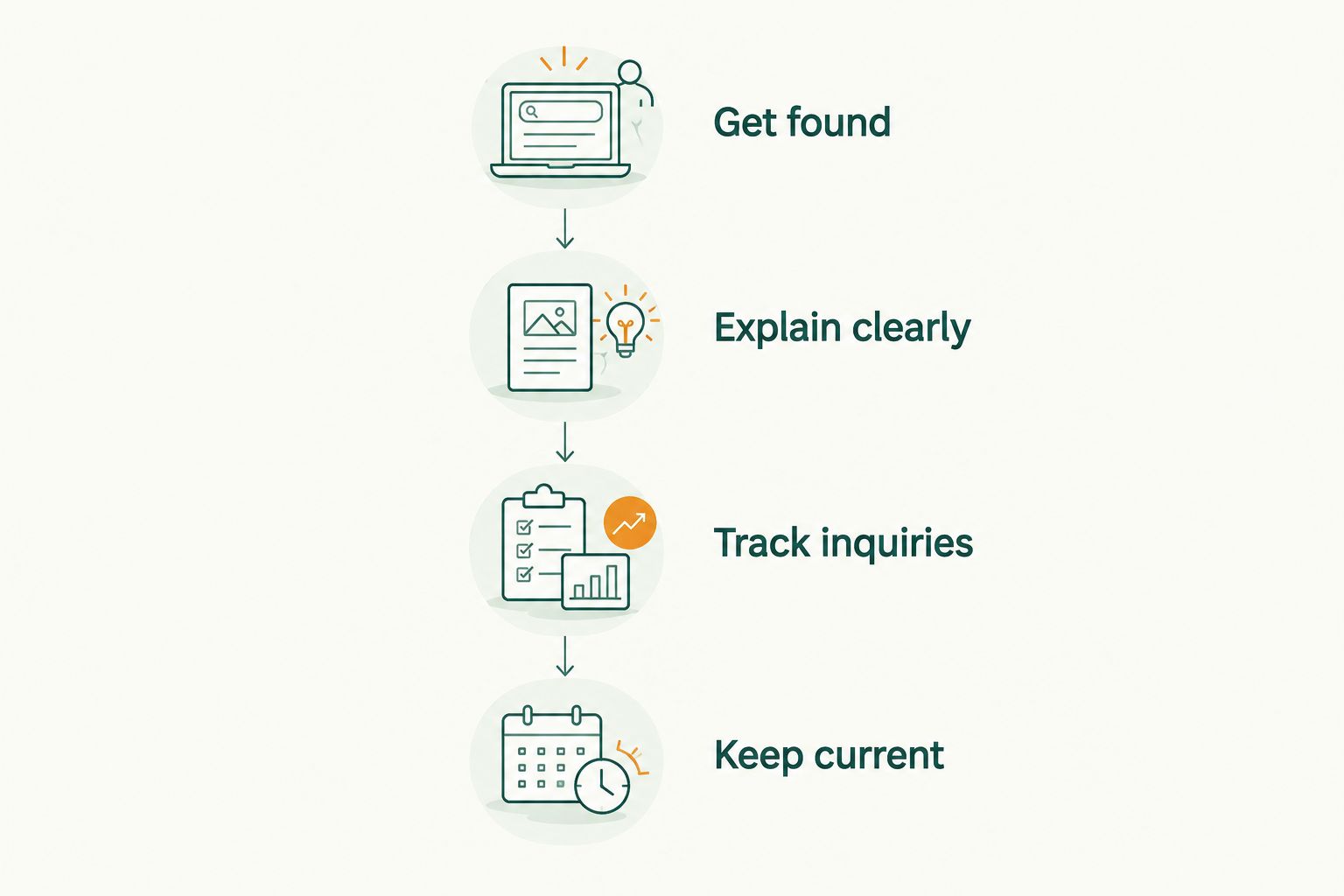
Use this sequence:
- Get found: Check your search and map information.
- Explain clearly: Answer customer questions through your chosen channel.
- Track inquiries: Record how customers heard about you.
- Keep current: Correct details when your business changes.
The sequence keeps promotion connected to a customer action. More accounts are not the goal; clearer discovery and useful conversations are.
FAQ
What's the best free advertising option for a local small business?
Google Business Profile is the best starting point for an eligible business seeking nearby search discovery. Keep business information accurate and follow Google's eligibility and verification rules.
Can I advertise my small business without buying ads?
Yes, you can promote your business through business listings, organic social posts, permitted community participation, and local cross-promotion. These approaches still require your time and attention.
Is Facebook better than Instagram for a local business?
Facebook is the better choice for community conversations; Instagram is the better choice for visual demonstrations. Choose the format you can maintain and connect to relevant customer inquiries.
Should I list my business on Bing and Apple Maps too?
Yes, add accurate business information through Bing Places for Business and Apple Business Connect when they fit your business. Maintain each listing rather than assuming a change elsewhere updates every platform.
Can I promote my business in neighborhood groups?
You can promote your business only where the group's rules allow it. Disclose your business connection and avoid posting advertisements in unrelated discussions.
Are Hometownfirst business listings free?
No, Hometownfirst local business directory listings use monthly subscriptions. Consumers can browse and search the directory without a browsing charge; that is separate from the business listing arrangement.
How do I know whether free promotion works?
Record how customers found your business and connect inquiries or referrals to their source. Do not treat views, followers, or posting activity as proof of customer acquisition.
One last thing
Before publishing your next promotion, read your business information as a first-time customer. Can you tell what the business does, where it serves customers, and how to take the next step? Fix the unanswered question before adding another channel.