
Birdeye brings review requests, reputation monitoring, and customer communication into one platform. That focus does not replace a local directory built to help neighbors discover your business, specials, and events. The best Birdeye alternative in 2026 is Hometownfirst if you need local directory discovery; Podium if you need a messaging-centered customer workflow.
- Compare Birdeye alternatives by the job you need done: reputation management, local discovery, or customer messaging.
- Hometownfirst is best for independent businesses seeking local directory discovery, specials, and event listings.
- Google Business Profile is best for managing your business presence and reviews on Google Search and Maps.
- Podium suits customer messaging; Yelp suits a public business profile with customer reviews.
- Keep Birdeye when coordinated review management matters more than adding another discovery channel.
Why this matters
A reputation platform and a business directory solve different problems. One helps you manage what customers say; the other gives people another place to find what you sell. Replacing the first with the second leaves a gap if you still need organized review requests and monitoring.
For an independent restaurant, shop, or service business, the useful question is not which platform has the longest feature list. It is which task needs attention: getting found, earning feedback, answering customers, or keeping profiles accurate.
This 2026 comparison separates those jobs. Choose a replacement for the workflow you use, not just another name in the local-business category. Some options below are direct competitors; others are narrower channels that belong alongside reputation software.
Birdeye alternatives at a glance
Use this table to decide which type of option deserves a closer look. Birdeye stays in the comparison because keeping it is a valid choice, especially when you need several reputation tasks in one place.
| Platform | Best for | Standout function | How it differs from Birdeye | Main limitation |
|---|---|---|---|---|
| Birdeye | Coordinated reputation management | Review requests and reputation monitoring in one platform | Benchmark for the comparison | Does not replace a community-focused directory |
| Hometownfirst | Independent businesses seeking local discovery | Location-based listings with specials and events | A directory rather than a reputation-management replacement | Not a substitute for review-management workflows |
| Google Business Profile | Your presence on Google Search and Maps | Business information, customer reviews, and owner responses | Direct management of one search platform | Does not consolidate reviews from other platforms |
| Podium | Messaging-centered customer communication | Business messaging and review-request workflows | Centers the comparison on customer conversations | Not a local-shopping directory |
| Yelp | A public profile on a review-based directory | Business listings and customer reviews | A destination where customers discover and assess businesses | Yelp reviews remain separate from reviews elsewhere |
The directory options should not be judged as incomplete versions of Birdeye. They have a different purpose. Likewise, a messaging platform should not win merely because you can receive customer messages there; those conversations must fit how your business actually works.
1. Hometownfirst: best for local directory discovery
Hometownfirst is a local business directory for independent restaurants, retailers, and service businesses. Business owners can list their profiles, specials, and events, while community members search by location and discover nearby businesses. Hometownfirst is best for local directory discovery, not replacing a reputation-management system.
That distinction matters if your immediate priority is helping neighbors find you. A directory listing gives your business a place to present what you offer; review software addresses the separate task of requesting, monitoring, and responding to customer feedback.
Where it shines
- Supports location-based discovery for small, independent businesses.
- Lets businesses present profiles, specials, and events.
- Gives consumers a place to browse local businesses without selling their information or sending unsolicited ads afterward.
- Keeps the focus on local spending and connections between businesses and nearby customers.
Where it falls short
- It is not a replacement for dedicated review-request and reputation-monitoring workflows.
- A listing does not guarantee visits, inquiries, or sales.
- You still need to keep your other public profiles and customer-review responses current.
Head-to-head: local discovery versus reputation management
| Dimension | Local directory option | Birdeye |
|---|---|---|
| Main purpose | Help people find local businesses | Manage business reputation and customer interactions |
| Business content | Profiles, specials, and events | Review and customer-communication workflows |
| Role in your setup | Additional discovery channel | Reputation-management platform |
Best for: An independent business whose next priority is local discovery and a place to share specials or events.
If your current review process works, do not dismantle it just to add a directory. Keep the feedback workflow and evaluate whether another local discovery channel serves a separate need.
Verdict: Buy for directory discovery; skip as a like-for-like Birdeye replacement.
2. Google Business Profile: best for your Google presence
Google Business Profile lets eligible businesses manage how they appear on Google Search and Maps. You can maintain business details, publish photos, and respond to Google reviews. It is the direct option when your main problem is an inaccurate or neglected Google profile rather than scattered reputation work.
For your 2026 shortlist, separate profile maintenance from broader review management. Keeping Google information accurate is necessary work, but it does not bring reviews from other platforms into the same workflow.
Where Google Business Profile shines
- Gives you direct control over business information on Google Search and Maps.
- Lets you respond publicly to Google reviews.
- Supports photos and business details that help customers understand your business.
- Provides a focused starting point when your Google presence needs attention.
Where Google Business Profile falls short
- Covers Google reviews, not every place customers discuss your business.
- Does not replace a cross-platform reputation-management system.
- Requires ongoing attention to profile information and customer feedback.
Head-to-head: Google presence versus broader management
| Dimension | Google Business Profile | Birdeye |
|---|---|---|
| Main purpose | Manage your Google business presence | Coordinate reputation-management tasks |
| Review scope | Google reviews | Review management across supported platforms |
| Daily work | Maintain information and answer Google reviews | Manage review requests, monitoring, and communication |
Best for: An eligible local business that needs to correct its Google information or establish a consistent Google-review response routine.
Start with the actual problem. If customers encounter outdated hours or unanswered Google reviews, address those issues directly before changing software. Moving platforms does not remove the need for someone to maintain the profile.
Verdict: Buy into direct profile management; hold Birdeye if you still need broader coordination.
3. Podium: best for messaging-centered customer work
Podium combines business messaging with review-request workflows. It belongs on a Birdeye alternatives shortlist when customer conversations are a central part of your daily work, not just an occasional task.
The decision is about workflow fit. Compare how your team receives messages, handles replies, and requests feedback rather than assuming another reputation platform will automatically make the work easier.
Where Podium shines
- Combines customer messaging and review requests.
- Makes customer communication a central part of the platform's purpose.
- Offers a direct competitor to evaluate when a directory cannot meet your needs.
Where Podium falls short
- It is not a local directory for neighbors browsing shops, restaurants, or specials.
- Changing platforms still requires checking your existing workflows and integrations.
- A messaging-centered setup is a poor fit if nobody takes responsibility for replies.
Head-to-head: customer conversations versus reputation focus
| Dimension | Podium | Birdeye |
|---|---|---|
| Comparison focus | Messaging-centered customer work | Coordinated reputation management |
| Shared task | Review requests | Review requests |
| What to examine | How conversations reach the right person | How reviews and feedback are managed |
Best for: A local business that wants customer conversations and review requests in a shared working environment.
Ask the person who answers customer messages to participate in the evaluation. A feature list cannot tell you whether that person can find a conversation, answer it, and follow up without confusion.
Verdict: Buy only after the messaging workflow fits; hold if reviews are your sole concern.
4. Yelp: best for a review-based directory presence
Yelp combines business discovery with public customer reviews. It is relevant when you want to manage your business presence on Yelp, not when you need one system for every review channel.
Where Yelp shines
- Gives customers a business profile and reviews in the same directory.
- Lets business owners manage profile information and respond to reviews.
- Supports a distinct discovery channel alongside your other business profiles.
Where Yelp falls short
- Yelp reviews do not replace Google reviews or feedback elsewhere.
- Managing a Yelp profile is not the same as operating a cross-platform reputation workflow.
- You cannot treat a public review profile as a business-controlled testimonial page.
Head-to-head: public directory versus management platform
| Dimension | Yelp | Birdeye |
|---|---|---|
| Main role | Review-based business directory | Reputation-management platform |
| Review scope | Reviews published on Yelp | Reviews across supported platforms |
| Owner task | Maintain the profile and respond | Coordinate requests, monitoring, and responses |
Best for: A business that needs an accurate Yelp profile and a consistent approach to Yelp reviews.
Verdict: Buy into profile maintenance; skip as a complete Birdeye replacement.
Why consider switching from Birdeye?
The reasons below are decision criteria, not claims about outages, price changes, or customer complaints. A switch makes sense when your required job differs from the platform's role.
You need discovery
If you want a location-based directory profile, specials, or event listings, investigate a directory. That is a different requirement from organizing reviews. Hometownfirst fits this local directory need without being presented as review-management software.
You need conversations
If handling customer messages is the main task, compare messaging workflows. Podium belongs in that evaluation. Look at who receives each conversation, who answers it, and how your team recognizes unfinished work.
You need Google maintenance
If the immediate issue is your Google information or Google-review responses, work directly in Google Business Profile. A broader replacement decision is unnecessary until you establish which additional tasks need support.
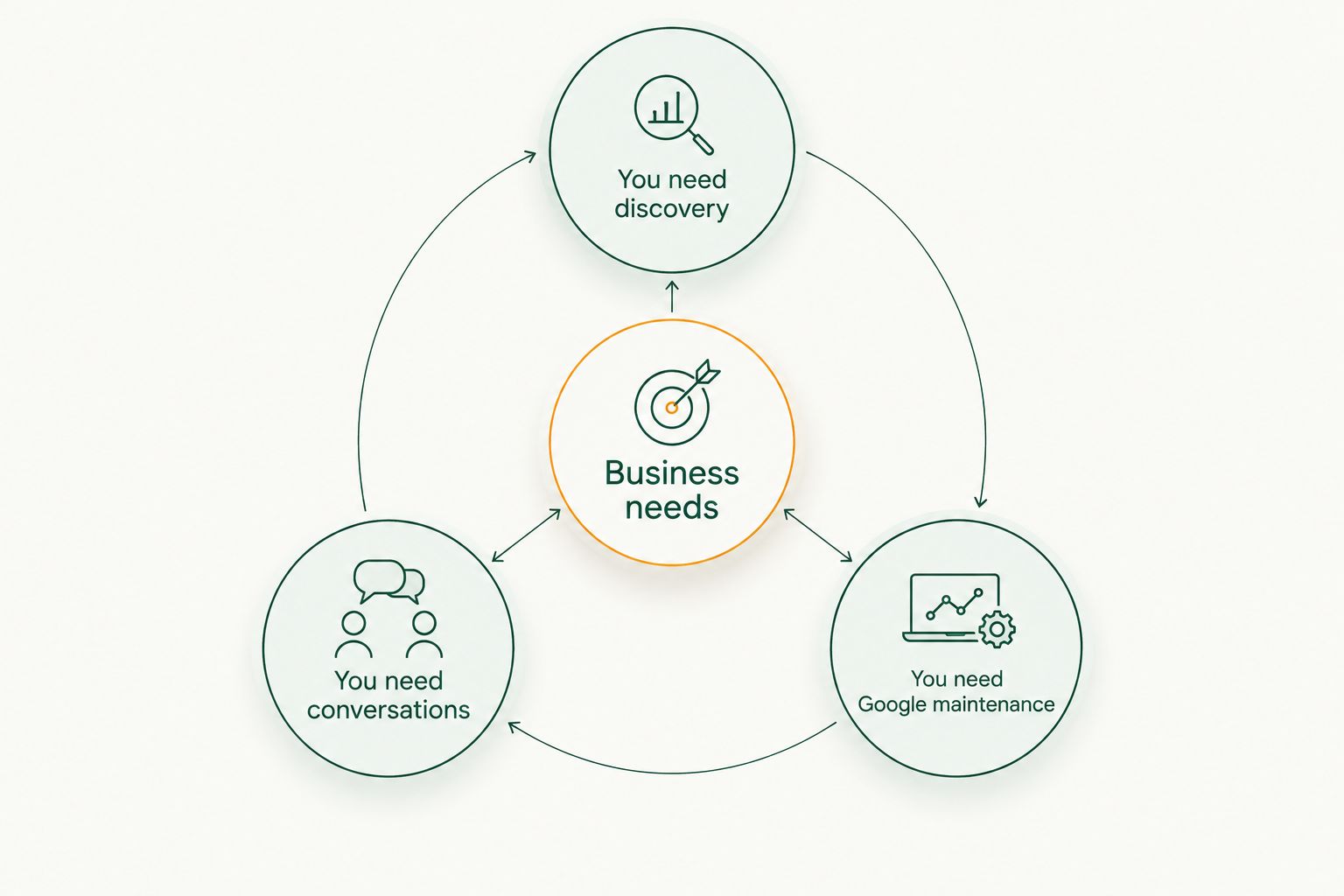
For a 2026 decision, write down the work you must preserve before choosing a replacement. A useful shortlist distinguishes an added channel from a substitute system; confusing the two creates unfinished work rather than a simpler setup.
Check the workflow before you commit
Use the same practical questions for every candidate. The answers matter more than a ranking position.
- Discovery: Where will customers encounter your business profile, and what information can you maintain there?
- Feedback: Where do reviews appear, and who monitors and answers them?
- Conversations: Who receives customer messages, and who handles follow-up?
- Continuity: What information and routines must remain usable if you change platforms?
Give each task a named owner. Then have that person walk through the relevant process during the evaluation. If you cannot explain how the daily work will happen, you have not finished comparing the options.
For directory listings, prepare accurate business information and decide who will maintain specials and events. For reputation software, identify the review and communication tasks you need to retain. Those are separate checklists even when one person manages both.
Explore local business discovery
See a local directory for independent businesses, specials, and events.
When staying with Birdeye is the right call
Keep Birdeye when you use its coordinated review and customer-communication workflows and those workflows meet your needs. A narrower profile or directory is not an equivalent replacement simply because it also concerns local businesses.
In 2026, judge your existing setup by the work it helps you complete. Can the responsible person monitor feedback, send appropriate review requests, and handle customer communication? If so, adding a discovery channel can be a separate decision.
Stay with Birdeye when reputation coordination is the requirement; add a directory when discovery is the requirement. Neither choice needs to cancel the other.
FAQ
What's the best Birdeye alternative for a small local business?
The best Birdeye alternative depends on the task: Hometownfirst fits local directory discovery, while Podium fits messaging-centered customer work. Google Business Profile addresses your Google presence, and Yelp provides a review-based directory profile.
Can a local business directory replace Birdeye?
A local business directory does not replace Birdeye's reputation-management workflows. Use a directory for discovery and business information; keep a separate process for review requests, monitoring, and responses.
Is Google Business Profile better than Birdeye?
Google Business Profile is the direct option for managing your presence and reviews on Google Search and Maps. Birdeye serves broader reputation-management needs, so the two are not interchangeable.
Should I choose Podium or Birdeye in 2026?
Compare Podium and Birdeye against your customer-messaging and review-management tasks. Choose the platform whose actual workflow fits the people responsible for doing that work.
Is Yelp a complete alternative to Birdeye?
Yelp is not a complete replacement for a cross-platform reputation-management system. It is a business directory and review channel that needs its own profile maintenance and review responses.
Can I keep reputation software and add a local directory?
Yes, reputation software and a local directory serve different purposes. Keep the reputation workflow for feedback management and use the directory as an additional discovery channel.
What should I check before changing reputation platforms?
Check review coverage, customer-message handling, access to existing information, and responsibility for daily tasks. Confirm how each required workflow will operate before ending your current setup.
One last thing
Before changing platforms, ask whoever answers customer reviews to describe yesterday's work. Then ask whoever maintains your business information to do the same. Their answers reveal whether you need better reputation coordination, more consistent profile maintenance, or another discovery channel.
That is the useful takeaway from this 2026 comparison: replace a workflow only after you know what must replace it. A directory can help people find you, but someone still needs to answer them.