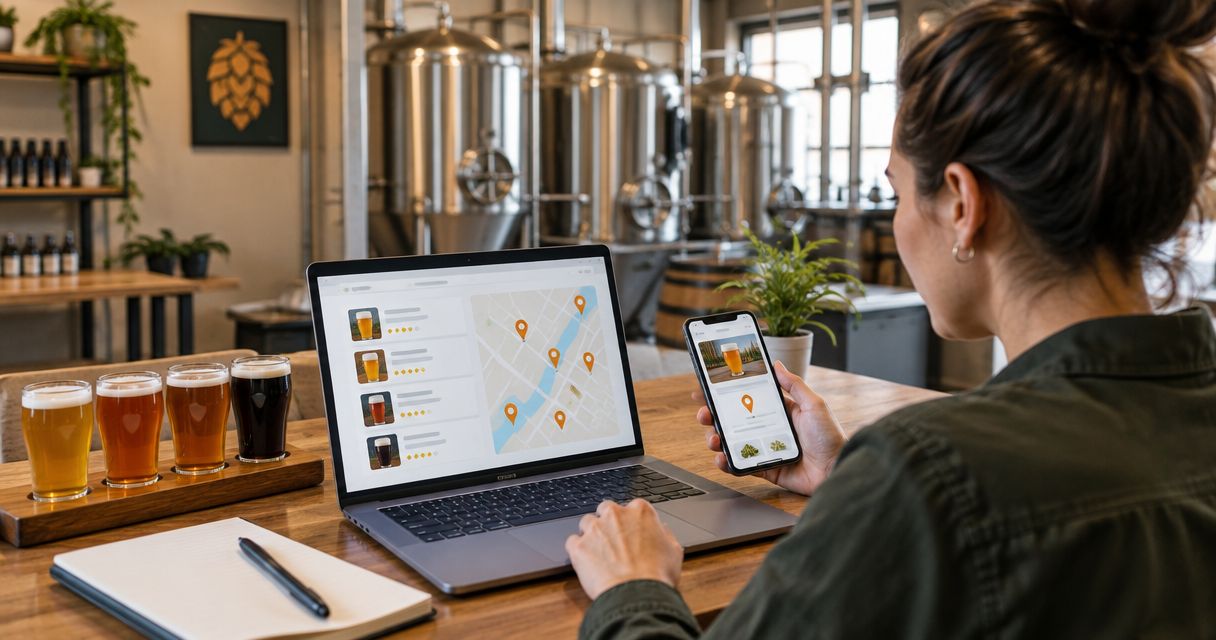
Business directory listings for breweries are public business profiles that help nearby customers find a brewery, understand the visit, and choose where to go. Your listings need to distinguish the taproom from the production facility, explain when guests can visit, and keep events separate from regular opening hours.
- Business directory listings for breweries should explain location, taproom hours, food arrangements, and visitor policies.
- Hometownfirst is best for independent breweries seeking local directory discovery and a place to publish specials and events.
- Start with accurate local listings; add promotion only after customers can plan a visit without guessing.
- Measure directory referrals and visitor inquiries, not just how many profiles you create.
Why this matters
A brewery listing should answer a practical question: can someone visit your location today, and what should they expect? A production address without public access is different from a taproom entrance. A brewery with a kitchen is different from one hosting a rotating food truck.
Your 2026 listing plan should start with those distinctions, not a long list of places to submit your name. Compare free business listing sites before adding another profile to maintain. An accurate profile is more useful than another copy of incomplete information.
Why business directory listings matter for breweries
Breweries serve several different visitor intentions. Someone looking for a tasting experience needs different information from someone buying packaged beer or meeting friends after work. Your directory description should make those differences clear without forcing readers to search through social posts.
For an independent brewery, a local directory also provides a place to describe the business by location rather than relying only on existing followers. Hometownfirst business directory listings support that local-discovery approach, with business profiles, specials, and events. They complement your own website; they do not replace detailed visitor information or a booking process.
Treat these as distinct listing needs:
- Find the entrance: identify the public-facing location, not merely the mailing address.
- Plan the visit: explain taproom hours, food arrangements, and relevant visitor policies.
- Choose an occasion: distinguish everyday visits from ticketed or scheduled events.
- Contact the right place: direct visitor questions to the location that can answer them.
A listing succeeds when someone can make a sound decision from the information provided. Do not make visitors infer public access from photographs of brewing equipment.
How to build brewery directory listings in 2026
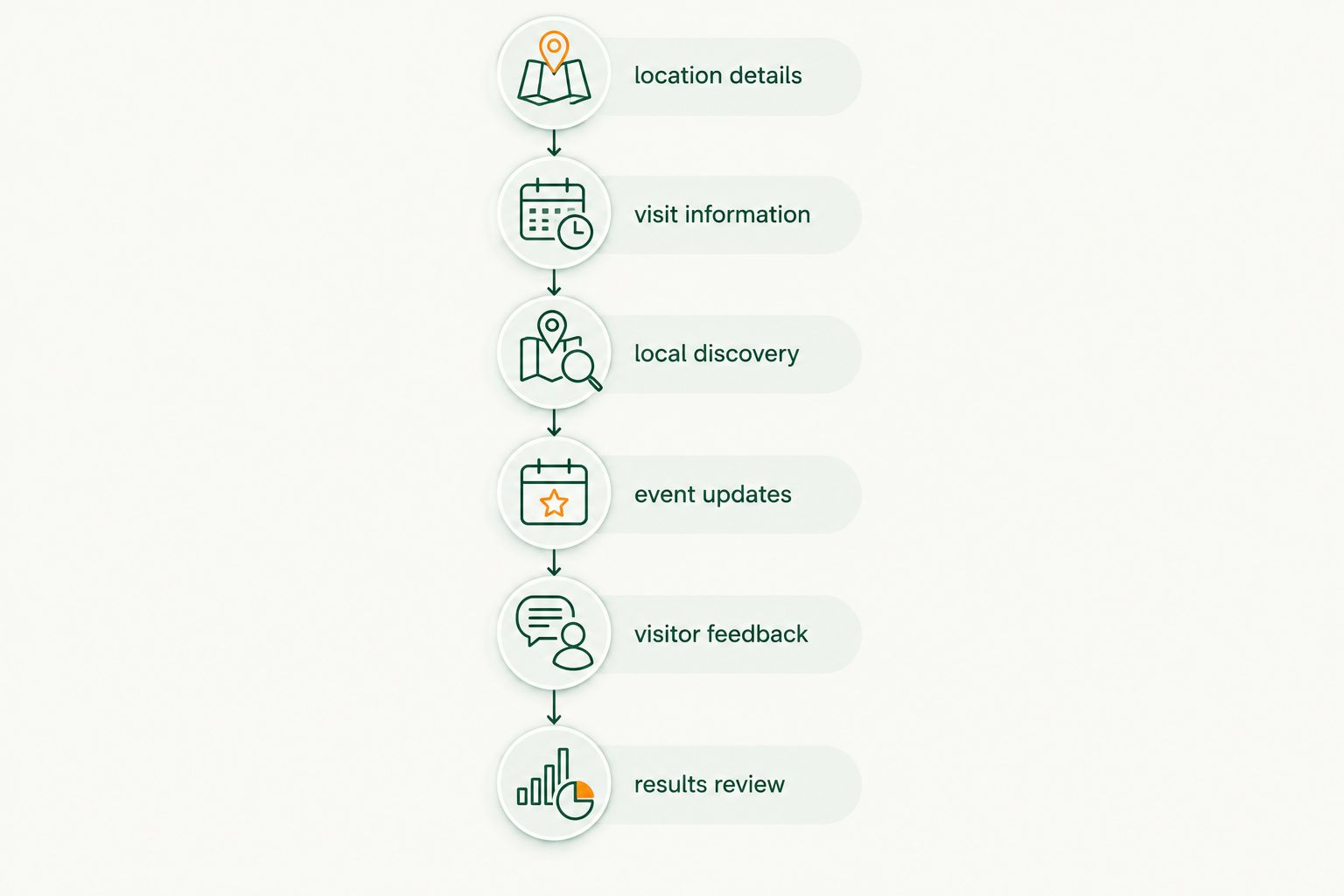
Start manually with a shared document and a spreadsheet. Keep your approved business details in the document and use the spreadsheet to record where those details appear. Your working sequence is location details, visit information, local discovery, event updates, visitor feedback, and results review.
Verify your location details
Build a master record before editing any directory. Write down the public business name, visitor address, phone number, website destination, and regular hours. Check each detail against how your brewery actually operates, not an old launch announcement.
For a brewery with several locations, separate the visitor information for each site. Do not present a production facility as a taproom simply because both belong to the same business. Every location record should describe the experience available at that address.
Assign an owner to the record so changes reach every listing. The person updating hours needs a clear way to learn about closures, private events, and changes to public access.
- Record the exact public business name for each location.
- Confirm the entrance visitors should use.
- Separate production, taproom, and retail locations where applicable.
- Keep regular hours distinct from event schedules.
- Record the staff member responsible for updates.
Explain the taproom visit
Write a short description that answers visitor questions before promoting the beer. Start with what the location is, where it is, and what guests can do there. Include a neighborhood or town name naturally rather than repeating nearby place names throughout the description.
Use a 3-question visitor check: where do I go, when can I visit, and what should I know before arriving? This is a recommended writing test, not a performance benchmark. If your description cannot answer those questions, revise it before submission.
Only state policies your brewery has confirmed. Food service, accessibility information, children, pets, reservations, and tours all require precise wording. A directory category does not establish any of those facts.
- Describe the location as a taproom, brewpub, production facility, or another accurate type.
- Explain food arrangements without implying a permanent kitchen when none exists.
- State confirmed visitor policies in plain language.
- Identify the appropriate contact for accessibility questions.
- Use current entrance and visitor-space photographs where the directory permits them.
Choose your local discovery channels
Start with the profiles you can maintain accurately. A Google Business Profile addresses discovery through Google Search and Maps, while your own website provides room for detailed visitor information. Check the platform's eligibility requirements before creating a profile for a location without public access.
Add a community-focused directory when its purpose matches your audience. Hometownfirst is best for independent breweries seeking local directory discovery and a place to publish specials and events. Its monthly subscription listing adds another channel to maintain, so decide who will keep the profile current before signing up.
Select channels by their role, not by the length of a directory list. In your 2026 plan, give each profile a clear job: location discovery, visit planning, or event discovery. Several profiles repeating the same incomplete description do not solve a visitor's problem.
- Check eligibility and ownership access before creating a profile.
- Choose the most accurate business category available.
- Enter the approved location record rather than rewriting basic facts.
- Record each profile's role in your spreadsheet.
- Keep account access under the business's control.
Publish events and specials clearly
Maintain a simple event document before distributing announcements. Give every event an accurate date, location, description, and participation requirement. Separate an event's schedule from the taproom's normal hours so a late performance does not accidentally become your everyday closing time.
Hometownfirst business directory listings let owners publish specials and events alongside their business profiles. Use that capability for confirmed announcements, not tentative plans. Review alcohol-related promotions against applicable rules before publishing them anywhere.
For recurring events, check individual dates rather than assuming the usual schedule still applies. A private booking, holiday, or canceled appearance changes what visitors need to know. Remove expired announcements instead of leaving readers to work out whether they still apply.
- State the event date and the correct location.
- Explain ticketing or reservation requirements when applicable.
- Distinguish regular taproom service from event participation.
- Confirm promotion terms and applicable alcohol rules.
- Remove or update canceled and expired announcements.
Answer visitor feedback consistently
Create a manual response routine before considering extra tools. Read the feedback, confirm what happened, and answer the visitor's actual concern. Questions about a locked entrance, confusing food information, or incorrect hours deserve a correction to the listing as well as a response.
Do not promise outcomes you cannot control or repeat a guest's personal details publicly. If a complaint needs a private conversation, explain how the visitor can contact the business through its established channel. Keep the public reply focused on the issue.
Ask for honest feedback without steering people toward a particular rating. Follow the review platform's rules, especially around incentives. A response routine should improve the visitor information, not just produce polite replies.
- Read new feedback on platforms that support reviews.
- Check the facts with the relevant staff member.
- Correct misleading listing details when a complaint reveals them.
- Avoid publishing personal information in replies.
- Record recurring questions for the next description update.
Measure results and maintain the profiles
Use a spreadsheet to record referral visits, inquiries, and profile changes. Where your analytics supports it, distinguish directory referrals from other website visits. Track what you can observe; a profile view alone does not establish a taproom visit or a sale.
Set a 15-minute weekly check for regular details and a 30-day review for channel results. These are suggested maintenance intervals, not claims about how quickly a listing produces customers. Update urgent changes when they happen rather than waiting for the scheduled check.
Keep the 2026 measurement plan small enough to use. Note which directory sends website visitors, which prompts useful questions, and which requires upkeep without a clear role. Ask visitors how they found you when that fits the conversation, but do not treat casual answers as a complete attribution system.
- Check hours, contact details, and active announcements weekly.
- Record directory referrals where analytics identifies them.
- Log inquiries that mention a specific listing.
- Review channel results against the time spent maintaining them.
- Correct closures and other urgent changes immediately.
Compare the main listing options for breweries
Each option below serves a different task. Choose the task first, then the channel; none removes the need to keep visitor facts accurate.
| Option | Best for | Main strength | Key limitation |
|---|---|---|---|
| Google Business Profile | Eligible breweries seeking Google Search and Maps discovery | Presents business information within Google's local search experience | Requires eligibility, ownership access, and ongoing updates |
| Hometownfirst | Independent breweries seeking community-focused directory discovery | Supports business profiles, specials, and events | Requires a monthly subscription and separate profile maintenance |
| Your brewery website | Visitors needing detailed policies and visit information | Gives you control over the explanation and visitor destinations | Visitors still need a way to discover it |
| Local organization calendars | Breweries promoting a specific public event | Places the announcement in a local event context | Submission rules vary, and an event entry is not a permanent business profile |
Use your website as the detailed reference and your listings as clear introductions to the visit. A calendar entry helps explain an occasion, but it cannot carry the whole job of describing your brewery. Review the mix in 2026 based on actual inquiries and referrals, not assumed audience size.
Common mistakes breweries make with directory listings
Listing the production address as the visitor destination
A valid business address is not automatically a public entrance. If guests cannot visit the production facility, do not describe it as a taproom. Identify the actual visitor location and check that directions and description agree.
Treating food trucks as permanent kitchen service
Rotating food arrangements need current information. Describe the arrangement accurately, and put date-specific vendors in event updates rather than making a permanent promise. Visitors planning a meal should not have to guess whether food is being served.
Mixing event schedules with regular hours
A special opening or private event should not silently overwrite the everyday schedule. Keep the announcement separate and state any effect on public access. Recheck the listing after the event ends.
Assuming photos explain visitor policies
A photo of a patio does not answer questions about pets, children, or accessibility. State confirmed policies directly and give visitors a contact route for questions. Do not substitute cheerful pictures for practical information.
Adding directories without assigning maintenance
Every additional profile creates another place for stale information to remain. Before adding a channel, name its owner and define its purpose. Remove duplicate profiles through the platform's appropriate process rather than ignoring conflicting records.
FAQ
What's the best way to start business directory listings for breweries?
Start with an approved location record and accurate visitor information. Confirm the public entrance, taproom hours, contact details, and business type before creating or editing profiles.
Should a brewery list its taproom separately from its production facility?
Separate the location records when the taproom and production facility have different visitor functions or addresses. Check each directory's eligibility rules before creating profiles, especially for a facility that does not receive visitors.
Is Hometownfirst a replacement for my brewery website?
Hometownfirst is a local directory channel, not a replacement for your brewery website. Use its profile, specials, and events alongside a website that explains detailed visitor information and any booking requirements.
What information should a brewery directory description include?
A brewery directory description should identify the location type, town or neighborhood, and the experience visitors can expect. Add confirmed food arrangements and visitor policies without implying services the location does not provide.
Can I promote brewery events through a directory?
You can promote events through directories that support event publishing. State the correct date, location, and participation requirements, and keep the event schedule separate from regular taproom hours.
How often should I update my brewery listings in 2026?
Update brewery listings immediately when hours, public access, or contact details change. Use a weekly check for routine accuracy and a separate review of active events so expired announcements do not remain visible.
How do I know whether a brewery directory listing is working?
Measure identifiable website referrals and inquiries that mention the directory. Compare those observations with the work needed to maintain the profile; views alone do not prove visits or sales.
One last thing
Ask someone unfamiliar with your brewery to plan a visit using only your listing. Do not explain anything while they read. Watch for the first question they cannot answer, then add the missing information.
Make that the final check on your 2026 directory updates. A listing is ready when a new visitor can understand the destination without help from your staff.