
Wheree gives people a directory for discovering local businesses and places. A directory listing alone does not cover every way customers find you, especially when you also need map visibility, neighborhood conversations, or a place to publish specials. The best Wheree alternative in 2026 is Hometownfirst if you need a local business directory for profiles, specials, and events; Google Business Profile if you need visibility on Google Search and Maps.
- Hometownfirst leads these Wheree alternatives for independent businesses that want local directory listings, specials, and events.
- Google Business Profile is best for managing your business presence on Google Search and Maps.
- Yelp suits review-led discovery; Nextdoor suits neighborhood conversations; Facebook suits ongoing business updates.
- Choose local business listings by the customer task they support, not by how many profiles you can create.
Why this matters
Your customer might search for a nearby restaurant, compare reviews before calling a contractor, or notice a shop's upcoming event. Those are different tasks. One listing does not need to do all of them.
For a small business owner comparing Wheree alternatives in 2026, the useful question is not which platform has the longest feature list. It is which platform supports the next action you want a nearby customer to take.
Keep a useful listing and add the channel that fills a specific gap. Replacing everything at once creates more profiles to maintain without giving you a clearer plan.
Wheree alternatives at a glance
This comparison separates local directories from search profiles and community platforms. The distinction matters: posting an update to followers is not the same job as appearing when someone searches for your business on a map.
| Platform | Best for | Standout function | Difference in focus from Wheree |
|---|---|---|---|
| Wheree | Directory-based discovery of local businesses | Business and place listings | The directory option you are benchmarking |
| Hometownfirst | Independent businesses sharing profiles, specials, and events | Location-based local business discovery | A local-first directory with business-owner listings and specials |
| Google Business Profile | Your presence on Google Search and Maps | Managing business information within Google | Search and map presence rather than a separate discovery directory |
| Yelp | Customers comparing businesses through reviews | Business pages and customer reviews | A review-centered route to business discovery |
| Nextdoor | Connecting with people in nearby neighborhoods | Neighborhood discussions and business pages | Community conversation rather than directory browsing alone |
| Keeping people informed about your business | Business Pages, posts, and events | Ongoing updates and interaction rather than a directory-first experience |
Do not treat this table as a reason to open every account. Choose a primary job, then decide which supporting profile you can keep accurate.
1. Hometownfirst: best for local profiles, specials, and events
Hometownfirst is a local business directory for small, independent restaurants, retailers, and service businesses. Owners can list their profiles, post specials, and list events, while community members search for businesses by location. It fits an owner who wants local discovery tied to what the business is offering now.
Where it shines
- Local business focus: The platform is built around connecting community members with nearby businesses.
- Profiles and timely updates: Owners can share business information alongside specials and events.
- Consumer privacy: People can browse and search without their information being sold or receiving unsolicited advertising afterward.
- A clear business model: Business owners use monthly subscription listings; consumers use the directory without a subscription.
Where it falls short
- A recurring subscription is an ongoing commitment, not a profile you create and forget.
- You still need to keep specials and event details current. An expired offer does not help a customer decide what to do next.
- A directory listing does not replace your website or your business presence on Google Maps.
Best for: Independent businesses that want customers to discover their location, current specials, and local events in one directory.
Choose this option when the missing piece is a local place to present your business and its current activity. Keep your website and map information accurate alongside it; each serves a different customer need.
Verdict: Buy — choose the listing when local directory discovery, specials, and events match your priorities.
2. Google Business Profile: best for Google Search and Maps
Google Business Profile lets eligible businesses manage how their information appears on Google Search and Maps. It is the strongest fit when your immediate task is keeping your address, hours, contact details, and business category accurate within Google. Customers do not have to visit a separate directory to encounter that information.
Where Google Business Profile shines
- Search and map context: Your business information appears within the Google services people use to search for places.
- Practical details: Owners can manage information customers need before calling or visiting.
- Customer feedback: Reviews and owner responses sit alongside the business profile.
Where Google Business Profile falls short
- Eligibility, verification, and profile management follow Google's rules.
- Creating a profile does not guarantee a particular search position.
- You are managing a presence inside Google's platform, not an independent website you control.
Best for: Eligible local businesses that need an accurate, managed presence on Google Search and Maps in 2026.
| Dimension | Google Business Profile | Wheree |
|---|---|---|
| Main setting | Google Search and Maps | A business discovery directory |
| Customer task | Find business information within search or maps | Browse or discover business listings |
| Role in your plan | Manage your Google business presence | Add a directory discovery destination |
These roles are complementary. Switching directory platforms does not remove the need to check your Google information, and a Google profile does not make every other listing unnecessary.
Verdict: Buy into Google Business Profile as a search-and-map foundation, not as a replacement for every directory.
3. Yelp: best for review-led business discovery
Yelp brings business information and customer reviews together. It suits customers who want to compare other people's experiences before deciding where to eat, shop, or book a service. For an owner, that makes the business page both a discovery destination and a place to respond to feedback.
Where Yelp shines
- Business pages give customers a place to examine information and reviews together.
- Owner responses let you address feedback publicly.
- The review-centered format supports customers who want to compare experiences before choosing.
Where Yelp falls short
- Customers control what they write in their reviews; you do not control the whole story.
- A business page needs attention when details change or feedback calls for a response.
- Reviews are not a substitute for a clear description of your services, current hours, or booking process.
Best for: Businesses whose customers use reviews to compare local options.
Choose Yelp for the review task, not because another directory exists. In 2026, the practical question is whether Yelp is a place your customers consult and whether you will maintain the page and respond professionally.
Verdict: Hold Yelp as a review-focused complement when it serves your customers' decision process.
4. Nextdoor: best for neighborhood conversations
Nextdoor organizes community activity around neighborhoods and offers business pages. Its distinct role is connecting a business with neighborhood discussion, rather than simply adding another destination for browsing listings.
Where Nextdoor shines
- Neighborhood context gives local recommendations a clear geographic setting.
- Business pages provide a place to present your business within the platform.
- Conversations let you answer relevant local questions rather than only publish static information.
Where Nextdoor falls short
- Community participation requires judgment; repeatedly inserting a sales pitch into conversations is not helpful.
- A neighborhood platform does not replace your wider web or map presence.
- You need time to participate appropriately, not just complete a profile.
Best for: Owners who want to take part in relevant neighborhood conversations.
Verdict: Hold Nextdoor as a community channel when you can contribute useful information consistently.
5. Facebook: best for ongoing updates and events
Facebook Pages give businesses a place to publish updates and interact with people. Facebook also supports events, making it useful when your task is telling an existing audience what is happening at your business.
Where Facebook shines
- Posts support changing information, announcements, and business updates.
- Events provide a format for sharing a planned gathering or activity.
- Comments and messages support conversation with customers.
Where Facebook falls short
- A Page needs ongoing attention if you use it for updates and messages.
- Publishing a post does not guarantee that every follower sees it.
- Social updates do not replace accurate directory and map information.
Best for: Businesses that can keep an audience informed through regular posts and events.
Verdict: Hold Facebook as an update channel, not as your entire local discovery plan.
Why people switch from Wheree
A useful reason to switch is a mismatch between the job you need done and the channel you are using. That does not make Wheree a bad directory. It means you need a different primary focus.
Use these task-based reasons to decide whether to replace a listing or add another platform:
- You need local specials and events alongside your profile. Choose a directory whose stated offering includes those publishing options.
- You need to manage Google Search and Maps information. Google Business Profile addresses that task directly.
- You need a review-centered presence. Yelp gives customer feedback a central role.
- You want neighborhood participation. Nextdoor is built around neighborhood activity and discussion.
- You want to publish ongoing updates. Facebook provides a posting and interaction channel.
None of these reasons requires you to delete an accurate Wheree listing. Add a platform because it solves a named problem, not because a longer list of accounts looks like progress.
Choose a platform you can actually maintain
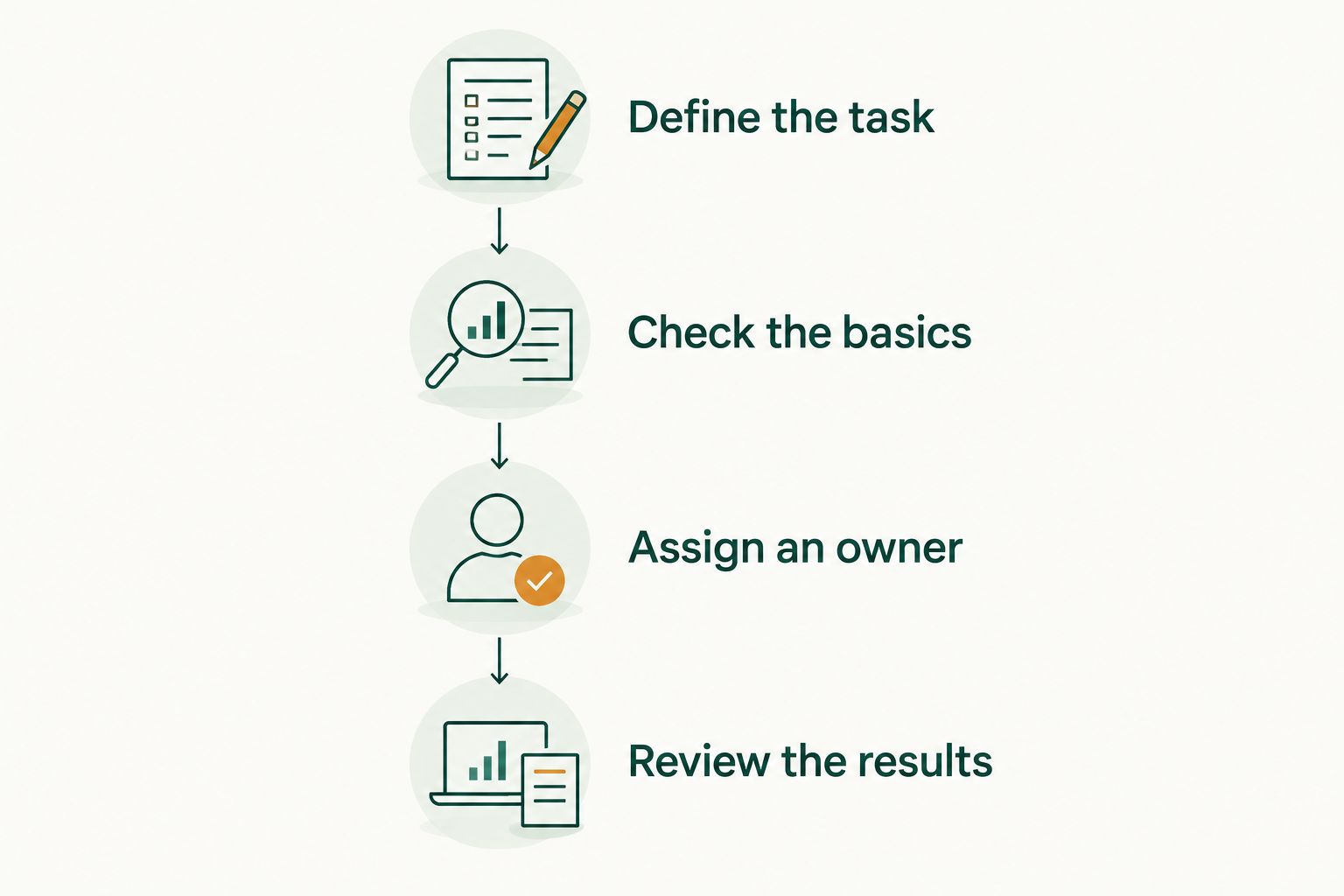
Use this process for your 2026 local listing plan. It keeps the decision tied to customer needs and the work you can realistically do.
Define the task
Write down the next customer action you want: a visit, a call, an inquiry, or attendance at an event. Then choose the platform whose role matches that action. Avoid asking a community discussion channel to do the same job as a map profile.
Check the basics
Set aside 15 minutes to check your public business name, address or service area, phone number, and hours across the profiles you already use. Correct conflicting details before adding another listing. Customers should not have to guess which information is current.
Assign an owner
Decide who updates the profile when hours, services, specials, or events change. Give that person access through the platform's appropriate account-management process. A profile without a responsible owner becomes another place for old information to linger.
Review the results
Review the new channel after 4 weeks as an initial checkpoint, not a guaranteed results deadline. Track 3 actions relevant to your business, such as calls, inquiries, and customer mentions of where they found you. Ask customers directly when the source is unclear, and do not credit a platform for activity you cannot connect to it.
Your first review should answer whether the information is accurate, the channel is manageable, and customers are taking the intended action. Keep the platform for a clear reason. Do not keep adding accounts to avoid making that decision.
Explore a local-first business directory
See a directory built for local business profiles, specials, and events.
When staying with Wheree is the right call
Stay with Wheree when its directory role fits your needs, your listing is accurate, and you have a reason to keep it in your customer discovery mix. A new platform is not automatically a better use of your time.
For your 2026 plan, distinguish replacement from addition. You can keep a directory listing while improving your Google profile or starting a neighborhood conversation channel. Do not remove a useful customer touchpoint just to make your platform list shorter.
FAQ
What's the best Wheree alternative for a small local business?
Hometownfirst is the best fit when you want a local business directory with profiles, specials, and events. Google Business Profile is the better fit when your main task is managing your presence on Google Search and Maps.
Is Google Business Profile better than Wheree?
Google Business Profile is better for managing business information on Google Search and Maps. Wheree serves a directory discovery role, so the platforms do not perform exactly the same job.
Should I delete my Wheree listing when I join another platform?
Keep an accurate Wheree listing if it remains useful to your business. Adding another channel does not require removing an existing customer discovery destination.
Is Yelp a good alternative to a local business directory?
Yelp is a good fit for review-led business discovery. Choose it when customer feedback and comparisons are an important part of how people select your business.
Should I use Nextdoor or Facebook for my local business?
Use Nextdoor for neighborhood participation and Facebook for ongoing business updates and events. Choose the channel whose activity you can maintain and whose purpose matches your customer task.
Can a directory listing replace my business website?
A directory listing does not replace a business website. The directory helps people discover your business, while your website gives you a separate destination for presenting information you control.
How do I compare Wheree alternatives in 2026?
Compare Wheree alternatives by customer task, maintenance work, and the actions you can track. Start with accurate business details, assign responsibility for updates, and review whether the channel is serving its intended purpose.
One last thing
An accurate, ordinary listing is more useful than an ambitious profile with an expired event or incorrect hours. Before opening another account, check the information a customer would use to visit or call you today. That is a small job with a clear purpose: remove avoidable confusion.